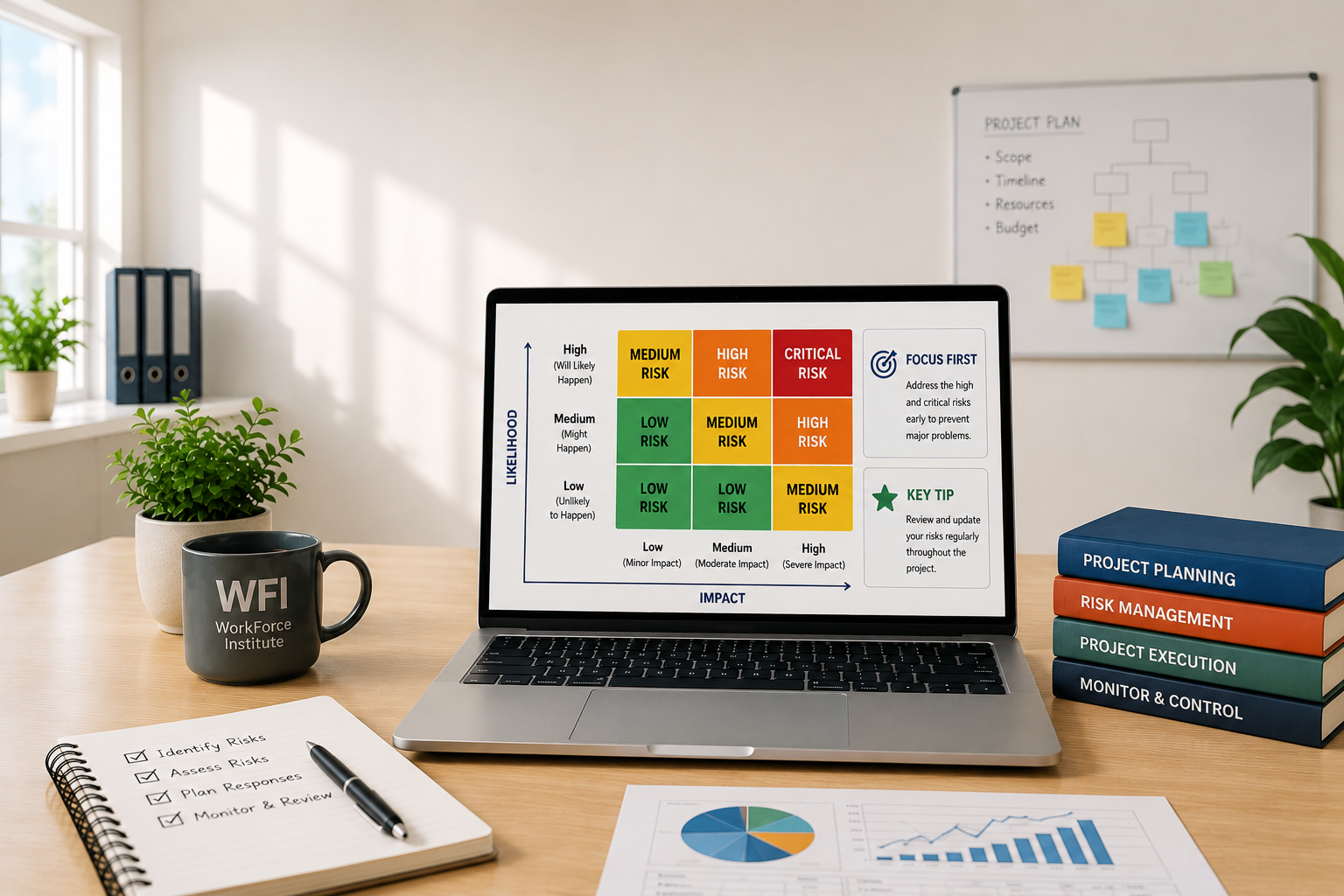
Project management is not only about planning tasks and meeting deadlines. It is also about preparing for problems before they slow the team down. Every project has risks. A key team member may leave. A deadline may shift. A vendor may deliver late. Costs may rise without warning.
That is why project risk management matters.
Risk management helps project managers spot possible problems early. It helps them think ahead, prepare solutions, and protect the project from avoidable setbacks. When done well, it gives teams more control, more confidence, and a better chance of success.
For anyone learning project management, risk management is one of the most useful skills to build.
What Is Project Risk Management?
Project risk management is the process of finding, reviewing, and managing anything that could affect a project. A risk is a possible future event that may create a problem for the project’s scope, budget, timeline, or quality.
A risk has not happened yet. It is something that might happen.
For example:
- A software tool may stop working
- A client may request major changes
- A team member may miss a deadline
- A supplier may increase prices
- A task may take longer than expected
Project risk management helps teams prepare for these situations before they become real problems.
Why Risk Management Matters
Many projects fail not because the team lacked effort, but because they were not ready for problems. Teams often focus so much on the plan that they forget to plan for what could go wrong.
That is where risk management becomes valuable.
Risk management helps teams:
- Reduce surprises
- Make better decisions
- Protect budgets
- Stay on schedule
- Improve team trust
- Increase the chance of project success
When risks are discussed early, the team can act with more confidence. Instead of reacting in panic, they respond with a plan.
The Difference Between a Risk and an Issue
This is an important point for new project managers.
A risk is something that may happen.
An issue is something that has already happened.
For example:
- Risk: A key designer may be unavailable next month.
- Issue: The designer is now unavailable and the task is delayed.
Risk management focuses on what could happen. Issue management deals with what is happening now. Strong project managers know how to handle both.
Common Types of Project Risks
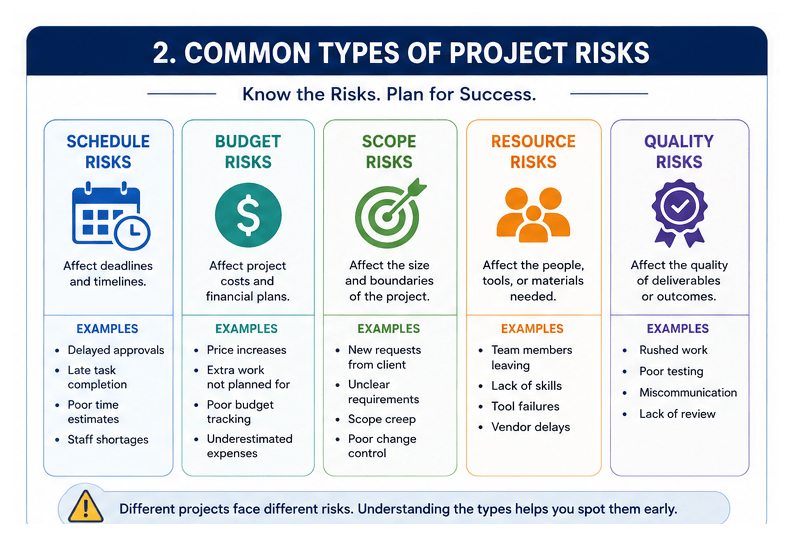
Project risks can come from many areas. Understanding the main types can help you spot them more easily.
1. Schedule Risks
These are risks that affect deadlines and timelines.
Examples include:
- Delayed approvals
- Late task completion
- Poor time estimates
- Staff shortages
If not managed, schedule risks can cause the entire project to run late.
2. Budget Risks
These are risks that affect the project’s cost.
Examples include:
- Price increases
- Extra work not planned for
- Poor budget tracking
- Underestimated expenses
Budget risks can create pressure on both the team and the client.
3. Scope Risks
These happen when the project grows beyond the original plan.
Examples include:
- New requests from the client
- Unclear requirements
- Poor change control
- Extra features added mid-project
This is often called scope creep. It is one of the most common project problems.
4. Resource Risks
These involve the people, tools, and materials needed for the project.
Examples include:
- Team members leaving
- Lack of skills
- Tool failures
- Vendor delays
Without the right resources, even a strong plan can fail.
5. Quality Risks
These are risks that affect the standard of the final deliverable.
Examples include:
- Rushed work
- Poor testing
- Miscommunication
- Lack of review
Quality risks can damage client trust and lead to rework.
The Main Steps in Project Risk Management
Risk management does not need to be complicated. In most projects, it follows a clear process.
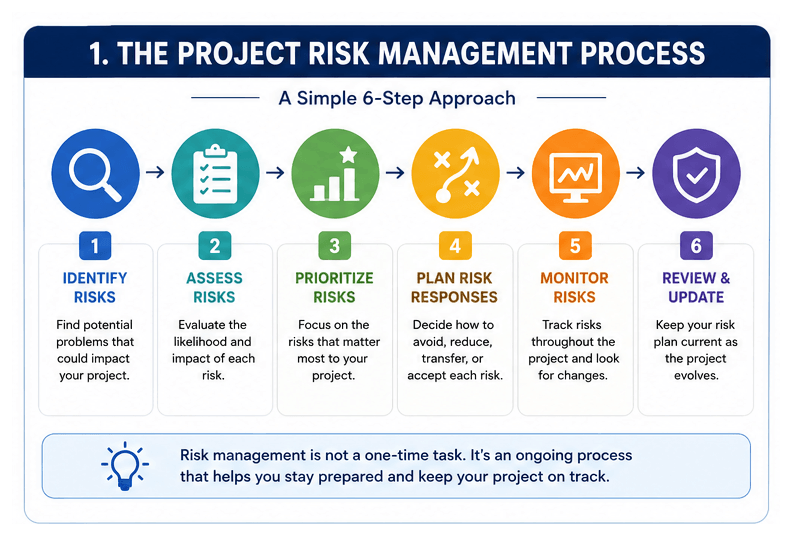
Step 1: Identify Risks
Start by asking what could go wrong.
This can be done through:
- Team discussions
- Past project reviews
- Checklists
- Stakeholder input
- Brainstorming sessions
At this stage, the goal is to build a list. Do not judge the risks too early. First, get them out in the open.
Helpful questions include:
- What might delay this project?
- What could increase costs?
- What tasks depend on other tasks?
- Where are we making assumptions?
- What parts of the project feel uncertain?
Step 2: Assess the Risks
Once risks are listed, review how serious each one is.
Most teams assess risks based on two things:
- Likelihood – How likely is it to happen?
- Impact – If it happens, how serious will it be?
A simple way to do this is to rate each risk as low, medium, or high.
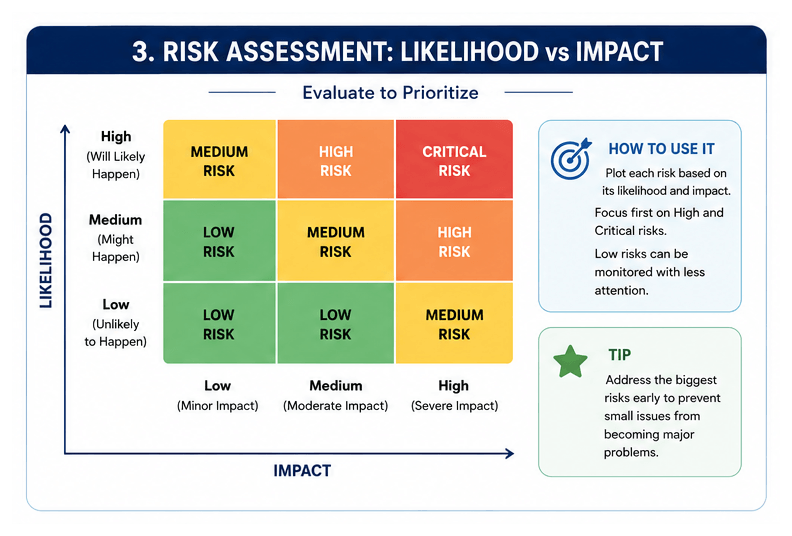
For example:
- A supplier delay may be likely and high impact
- A weather disruption may be low likelihood and medium impact
- A small software bug may be medium likelihood and low impact
This helps the team decide which risks need the most attention.
Step 3: Prioritize Risks
Not all risks deserve the same response.
Some risks are minor and can be watched. Others are serious and need action right away.
Prioritizing risks helps project managers focus on what matters most. It keeps the team from wasting time on low-value concerns while missing larger threats.
Step 4: Plan Risk Responses
After reviewing the risks, create a response plan.
There are several common ways to respond to a risk:
- Avoid – Change the plan so the risk cannot happen
- Reduce – Take steps to lower the chance or impact
- Transfer – Shift the risk to another party, such as a vendor or insurer
- Accept – Acknowledge the risk and prepare to deal with it if it happens
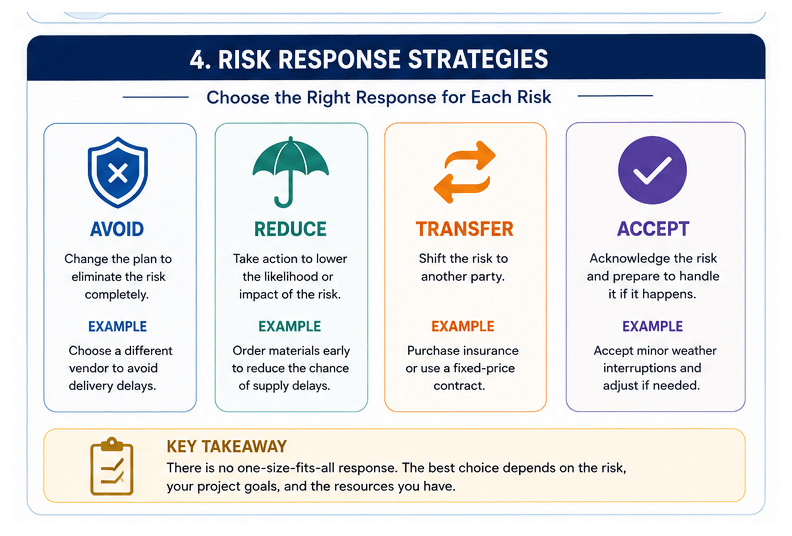
For example:
- If a vendor may delay delivery, you may reduce the risk by ordering early
- If a task depends on one expert, you may reduce the risk by cross-training another team member
- If the risk is very small, you may accept it and simply monitor it
Step 5: Monitor Risks Throughout the Project
Risks change as the project moves forward.
A risk that seemed small at the start may become serious later. A new risk may appear after a client request or team change.
That is why risk management is not a one-time activity. It should continue throughout the project.
Good project managers review risks in team meetings, update the risk log, and keep stakeholders informed.
What Is a Risk Register?
A risk register is a simple document used to track project risks. It helps the team record, manage, and monitor possible problems.
A risk register often includes:
- Risk description
- Risk owner
- Likelihood
- Impact
- Priority
- Response plan
- Status
This tool helps teams stay organized. It also creates accountability by showing who is responsible for each risk.
Even a basic spreadsheet can work as a risk register. The important part is keeping it updated.
Real-Life Example of Risk Management
Imagine a company is launching a new employee training platform.
The project team identifies the following risks:
- The software vendor may delay final setup
- Internal approvals may take too long
- The launch date may conflict with another company event
- Team members may not have enough time for testing
The project manager reviews each risk and creates response plans.
- For the vendor delay, the team schedules weekly check-ins.
- For approval delays, they book review meetings in advance.
- For the launch conflict, they confirm dates with leadership early.
- For testing limits, they assign backup testers.
Because the team planned early, they reduce last-minute stress and improve the chance of a successful launch.
This is the value of project risk management in action.
Mistakes to Avoid in Risk Management
New project managers often make a few common mistakes.
Ignoring Small Risks
Small risks can grow over time. A minor delay can affect many tasks later.
Keeping Risks to Yourself
Risk management should be shared with the team. Others may spot issues you missed.
Failing to Update the Risk List
A risk register is only useful if it stays current. Old information can create false confidence.
Treating Risk Management as Negative Thinking
Risk management is not about expecting failure. It is about being prepared. It helps teams move forward with better awareness.
Not Assigning Ownership
If no one owns a risk, it often gets ignored. Every major risk should have a clear owner.
How Risk Management Builds Stronger Project Managers
Risk management is more than a process. It is a mindset.
It teaches project managers to think ahead. It helps them stay calm under pressure. It improves planning, communication, and decision-making.
Project managers who manage risk well are often seen as more reliable because they:
- Plan carefully
- Communicate clearly
- Handle uncertainty better
- Build trust with teams and stakeholders
- Protect project goals
These are valuable skills in every industry.
How to Start Learning Risk Management
You do not need years of experience to learn this skill. Beginners can start by understanding the core ideas and practicing them in real or sample projects.
A strong training program can make this much easier. It can show you how project planning, communication, scheduling, budgeting, and risk management all work together.
That is one reason structured training matters.
Build Practical Project Management Skills with WorkForce Institute
If you want to grow your project management skills, the WorkForce Institute Project Management Bootcamp can help you build a practical foundation.
It is designed to help learners develop useful, job-ready skills that apply to real workplace projects. If you are new to the field, changing careers, or looking to strengthen your current skill set, learning topics like risk management can help you become a more confident and capable project professional.
Project management is not only about keeping tasks on a checklist. It is about leading work with clarity, preparing for challenges, and guiding teams toward results.
Final Thoughts
Every project carries some level of risk. The goal is not to remove all uncertainty. That is not realistic. The goal is to prepare for it in a smart and steady way.
Project risk management helps teams see problems before they happen. It gives project managers a clear way to assess threats, plan responses, and keep work moving forward.
For anyone learning project management, this is one of the most important topics to understand. It supports stronger planning, better teamwork, and more successful project outcomes.
If you want to build your knowledge further, explore the WorkForce Institute Project Management Bootcamp and start developing the practical skills needed to lead projects with confidence.