AI in Project Management: How AI Is Changing Project Manager Roles
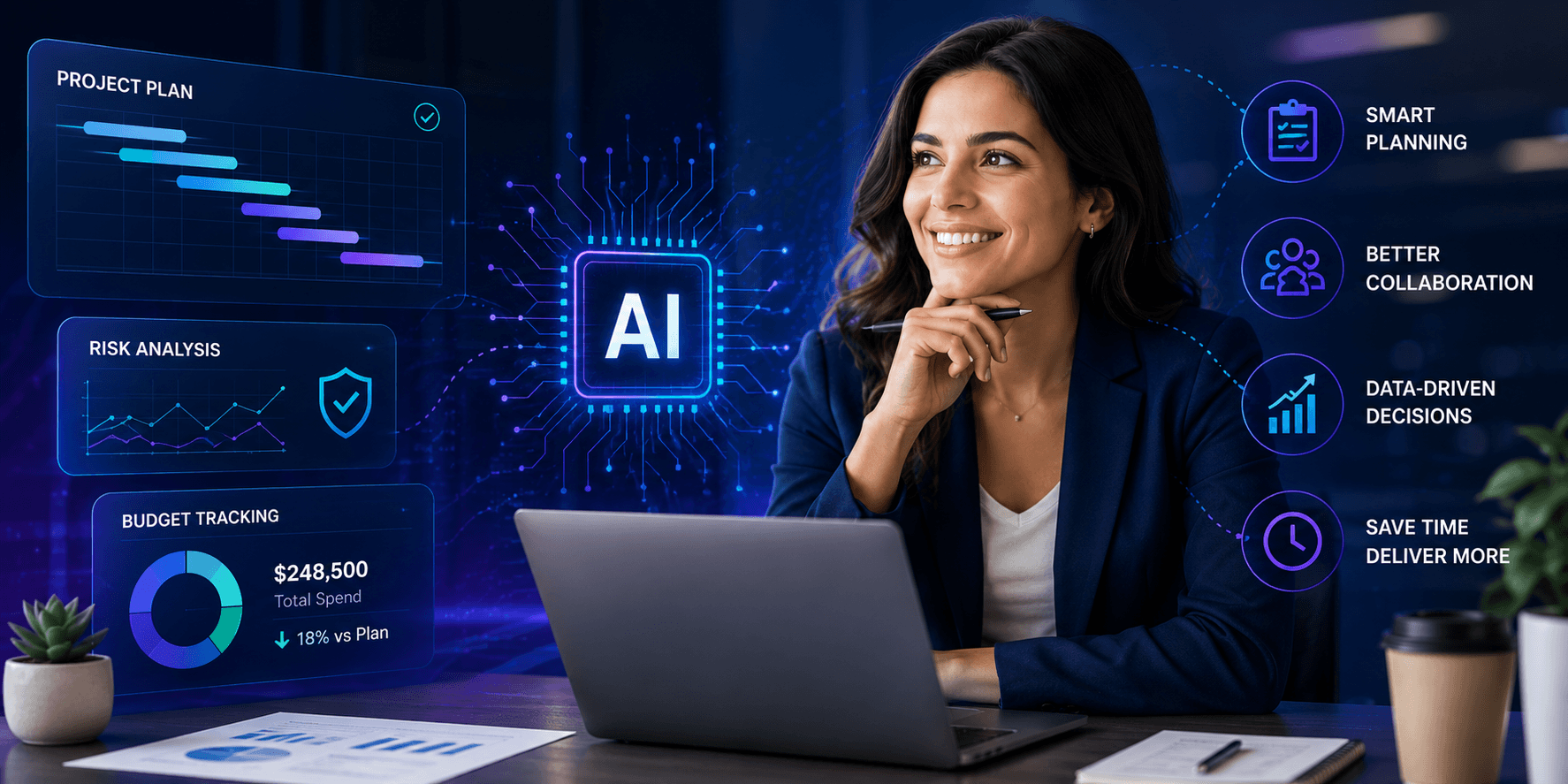
Artificial intelligence is changing how organizations plan projects, manage teams, allocate resources, and measure performance. Tasks that once required hours of manual work, such as preparing status reports, reviewing project data, and identifying potential risks, can now be supported by AI-powered tools.
But what does this mean for project managers? AI is not simply introducing new software into existing workflows. It is changing how project managers approach decision-making, communication, risk management, and leadership.
As businesses adopt AI, project managers need to understand both its capabilities and its limitations. The professionals who learn to combine AI-assisted workflows with strong leadership and problem-solving skills will be better prepared to manage increasingly complex projects.
In this guide, we explore how AI is changing project manager roles, which responsibilities can be enhanced through automation, what skills professionals need, and how to prepare for the future of AI in project management.
What Is AI in Project Management?
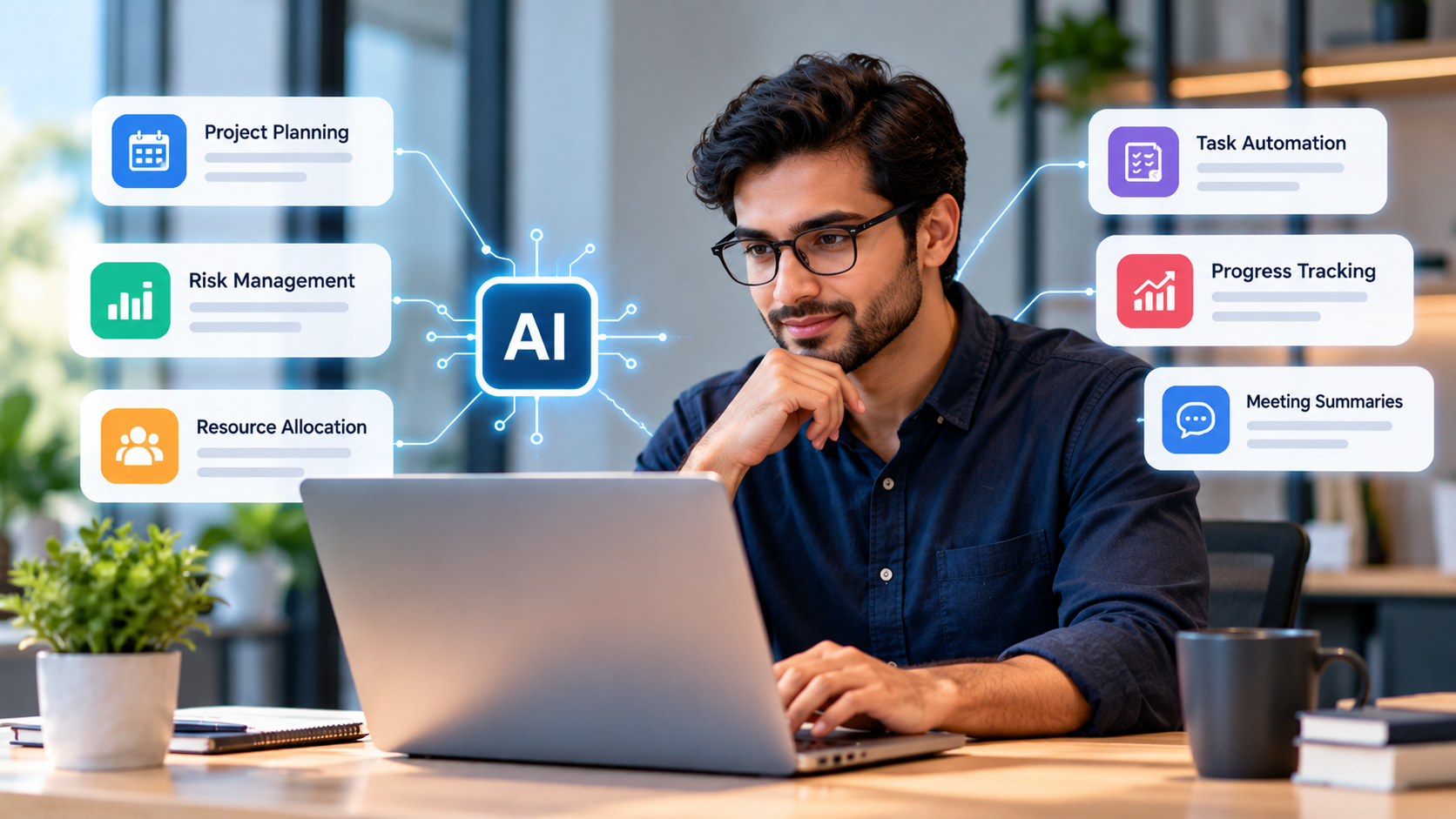
AI in project management refers to using artificial intelligence to support activities such as project planning, scheduling, resource allocation, progress tracking, risk identification, and stakeholder communication.
AI-powered systems can analyze project information, summarize large amounts of data, identify patterns, and generate recommendations. Generative AI can also help project managers create documents, meeting summaries, project plans, and reports from instructions or existing information.
For example, a project manager can use an AI assistant to summarize meeting notes, identify unresolved action items, or prepare an initial project status report. The manager still needs to verify the information, make decisions, and ensure that the final output reflects the project's actual circumstances.
AI is most useful when it supports professional judgment rather than replacing it.
How AI Is Changing Project Manager Roles
Traditionally, project managers have spent considerable time coordinating activities, updating documentation, tracking progress, and preparing reports. AI can help streamline many of these activities, allowing project managers to devote more attention to planning, collaboration, and strategic decisions.
1. From Manual Planning to AI-Assisted Project Planning
Project planning involves defining objectives, identifying deliverables, estimating timelines, assigning responsibilities, and coordinating dependencies. These activities can become complicated when projects involve multiple teams and changing requirements.
AI tools can help project managers:
- Generate initial project plans from defined objectives.
- Break large deliverables into smaller tasks.
- Identify dependencies that need further review.
- Draft project schedules and milestone lists.
- Compare planning scenarios based on different assumptions.
For example, when starting a website redesign project, a project manager could use AI to create a first draft of tasks covering discovery, content, design, development, testing, and launch.
The project manager must then validate estimates, confirm dependencies with the team, account for available resources, and approve the final plan. AI can accelerate preparation, but the quality of the plan still depends on accurate inputs and experienced oversight.
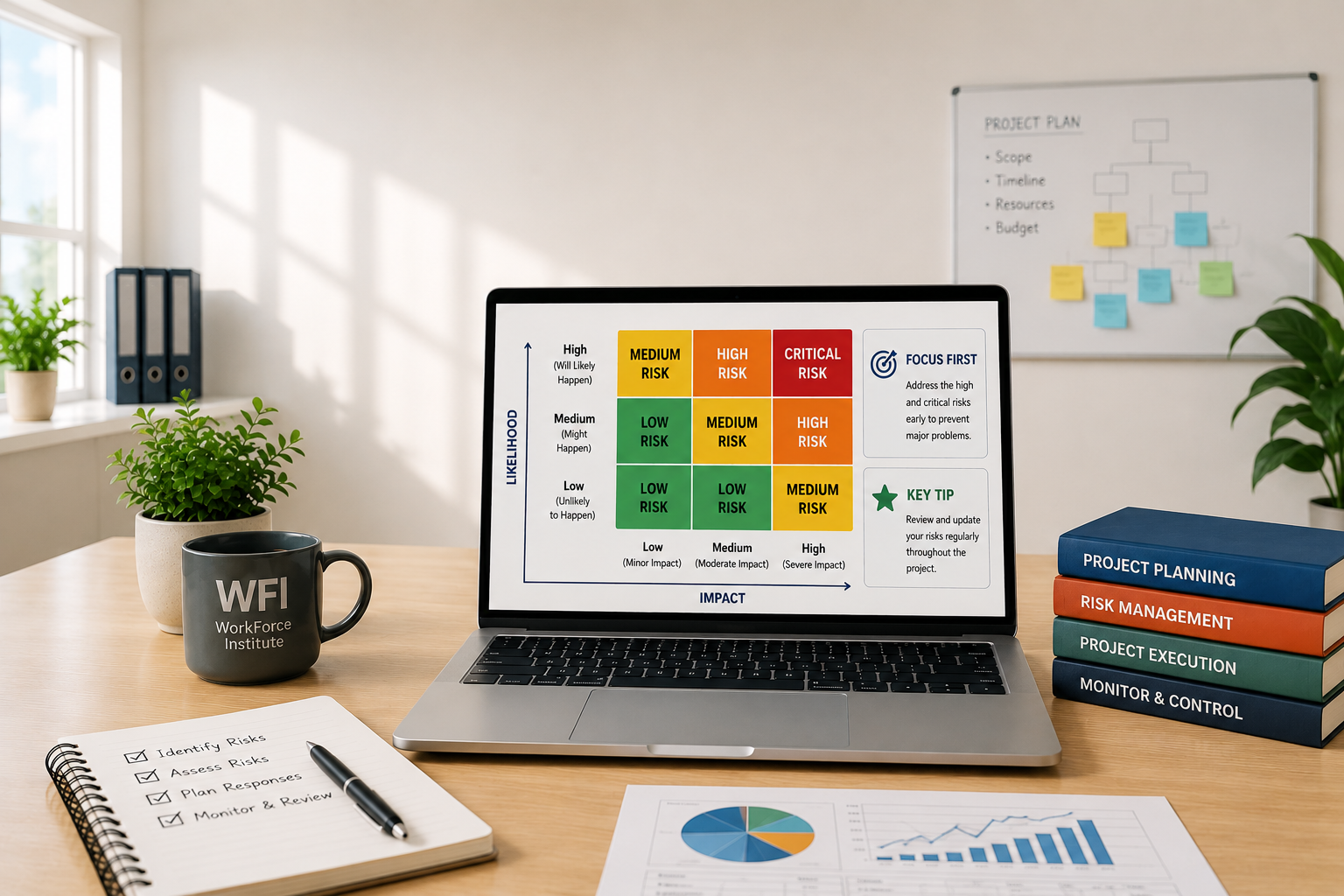
2. From Reactive Risk Management to Earlier Risk Identification
Project risks can emerge from missed deadlines, changing requirements, resource shortages, budget constraints, or supplier delays. If risks are identified too late, they can affect the entire project.
AI can help analyze historical project records, current progress reports, issue logs, and schedule information to identify patterns that may indicate emerging problems.
Project managers can use AI to:
- Review project data for potential schedule delays.
- Identify tasks that may need additional attention.
- Summarize recurring issues from previous projects.
- Draft and update risk registers.
- Compare possible responses to identified risks.
Consider a software project in which several critical tasks are repeatedly delayed. An AI-assisted analysis may help the project manager identify a dependency or resource constraint that needs investigation.
However, AI-generated risk alerts are not guarantees. Project managers should validate findings, consult relevant stakeholders, and use established risk management processes before taking action.
3. From Manual Reporting to AI-Assisted Insights
Project managers regularly prepare status updates for executives, clients, team members, and other stakeholders. Collecting information from multiple sources and rewriting it for different audiences can consume valuable time.
AI can help turn structured project data and approved updates into draft reports, summaries, and presentations.
For example, a project manager might use an AI assistant to:
- Summarize completed and outstanding tasks.
- Draft weekly progress reports.
- Highlight milestones that are at risk.
- Prepare executive summaries from detailed updates.
- Organize issues that require stakeholder decisions.
The project manager remains responsible for checking the accuracy of the report, confirming that its conclusions are supported by evidence, and communicating any uncertainties clearly.
4. From Manual Meeting Notes to Action-Oriented Follow-Ups
Meetings help teams make decisions and resolve problems, but important details can be missed when participants focus on the discussion rather than documentation.
AI meeting assistants can summarize conversations, organize decisions, and identify potential action items. Some tools can also connect meeting outcomes with task management workflows.
These capabilities can help project managers:
- Prepare meeting agendas.
- Summarize discussions and decisions.
- Draft follow-up messages.
- Organize action items and deadlines.
- Identify unresolved questions for the next meeting.
AI-generated notes should be reviewed before distribution. Project managers should also follow organizational policies for recording meetings, obtaining consent where required, and protecting confidential information.
5. From Static Resource Allocation to Data-Informed Decisions
Assigning work requires understanding team capacity, employee skills, task priorities, and project deadlines. When several projects compete for the same resources, balancing workloads becomes more difficult.
AI-assisted planning tools can help project managers examine workload information, compare resource scenarios, and identify possible scheduling conflicts.
For example, if two high-priority projects require the same specialist during the same week, an AI-assisted scheduling process may highlight the conflict and help the manager explore alternative timelines or assignments.
AI recommendations should not be treated as automatic staffing decisions. Project managers must consider team members' experience, development needs, working conditions, and other relevant factors that may not be represented in the available data.
6. From Routine Communication to More Personalized Stakeholder Updates
Different stakeholders need different levels of project detail. Executives may want a concise overview of progress and major risks, while technical teams need specific information about dependencies, blockers, and upcoming work.
Generative AI can help project managers adapt approved project information for different audiences. It can draft executive summaries, organize technical updates, and prepare responses to common questions.
The project manager still needs to maintain transparency, handle sensitive conversations, resolve disagreements, and build trust with stakeholders. AI can assist with communication, but it cannot replace accountability or meaningful human relationships.
Traditional Project Management vs. AI-Assisted Project Management
| Project Activity | Traditional Approach | AI-Assisted Approach |
|---|---|---|
| Project planning | Plans and task lists are prepared manually. | AI helps draft plans, task breakdowns, and possible scenarios. |
| Risk management | Risks are identified through reviews, experience, and project monitoring. | AI can analyze available data for patterns and potential warning signs. |
| Reporting | Managers collect updates and prepare reports manually. | AI can summarize approved data and draft reports for review. |
| Meetings | Notes and action items are recorded and organized manually. | AI can summarize discussions and suggest action items. |
| Resource allocation | Managers compare workloads, availability, and priorities. | AI can help identify scheduling conflicts and compare scenarios. |
| Decision-making | Managers evaluate evidence, experience, and stakeholder input. | AI can provide additional analysis, while managers remain accountable for decisions. |
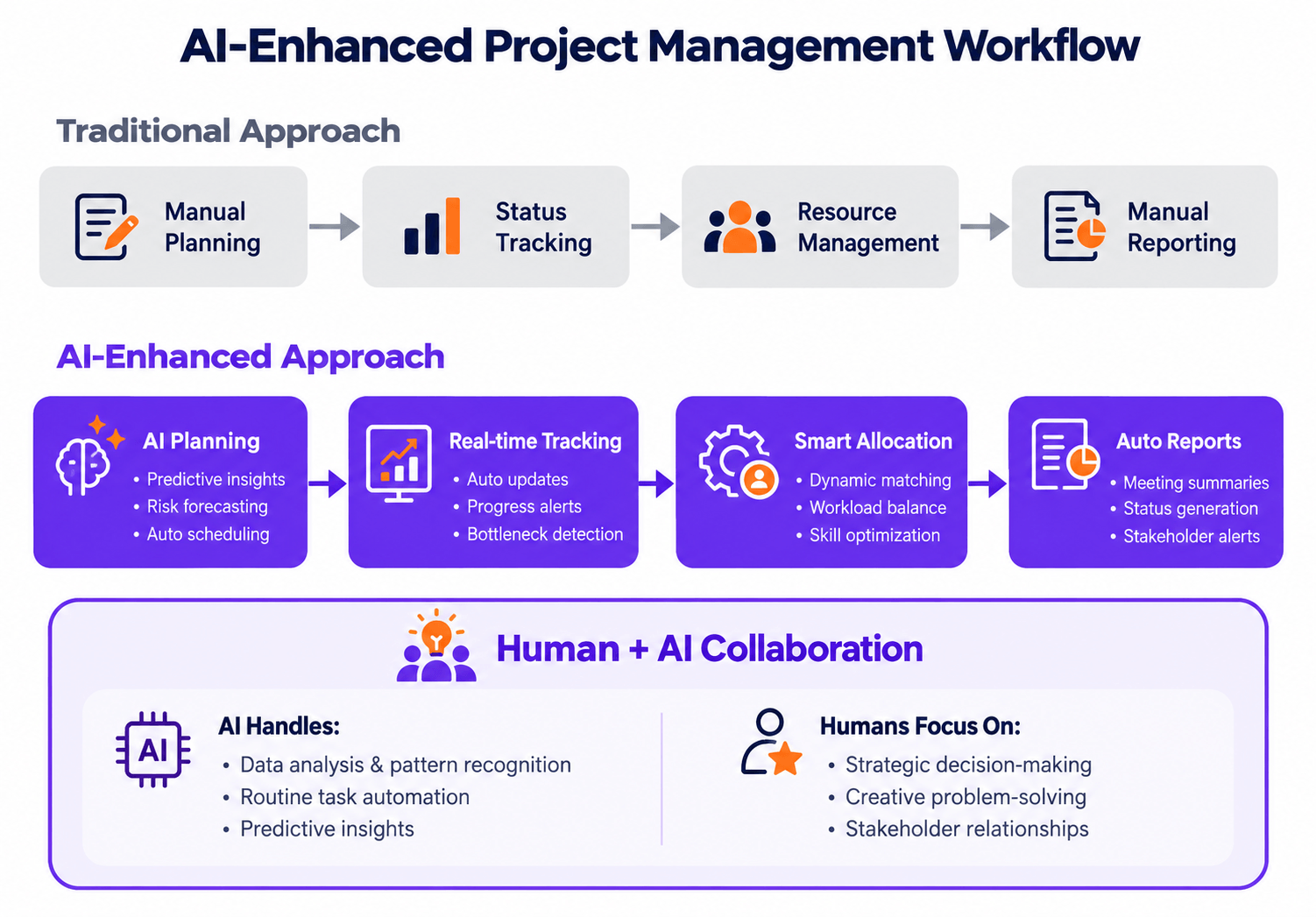
AI-assisted project management does not eliminate the need for established project management practices. Instead, it adds new ways to process information and support decisions while keeping human oversight central.
Which Project Management Tasks Can AI Automate?
AI can support or partially automate many repetitive activities, but the appropriate level of automation depends on the task, the tools available, the quality of the data, and the organization's policies.
| Task | How AI Can Help | What the Project Manager Must Do |
|---|---|---|
| Meeting summaries | Generate summaries and draft action items. | Verify decisions, owners, and deadlines. |
| Status reports | Summarize progress from available project data. | Validate figures and explain important changes. |
| Task planning | Suggest tasks, milestones, and dependencies. | Confirm scope, feasibility, and estimates. |
| Risk reviews | Identify patterns and suggest possible risks. | Assess severity and approve mitigation plans. |
| Stakeholder communication | Draft emails and audience-specific updates. | Check tone, context, confidentiality, and accuracy. |
| Schedule monitoring | Flag overdue tasks and possible conflicts. | Investigate causes and agree on corrective actions. |
Tasks involving sensitive information, financial commitments, personnel decisions, or significant project changes require particular care. Automation should follow appropriate approval processes rather than bypass them.
Essential Skills for Project Managers in the AI Era
As AI takes on more routine work, project managers need a combination of traditional leadership capabilities and new technology-related skills.
1. AI Literacy
Project managers should understand what AI can do, where it can fail, and how to evaluate its output. This includes recognizing inaccurate responses, incomplete context, biased recommendations, and limitations in the underlying data.
2. Prompting and Workflow Design
Clear instructions help generative AI produce more useful drafts and analysis. Project managers should learn to define the objective, provide relevant context, specify the expected format, and review the result before using it.
They should also understand how AI fits into existing project workflows rather than treating each task as an isolated interaction.
3. Data Interpretation
AI-generated recommendations are only as useful as the information and assumptions behind them. Project managers need to interpret schedules, budgets, workload reports, and performance indicators to decide whether a recommendation is reasonable.
4. Critical Thinking and Decision-Making
AI can offer suggestions, but it may overlook organizational context, stakeholder expectations, and practical constraints. Project managers must compare alternatives, challenge unsupported conclusions, and take responsibility for decisions.
5. Communication and Leadership
Team motivation, conflict resolution, negotiation, coaching, and stakeholder alignment remain essential. These skills help project managers navigate situations that require empathy, trust, and judgment.
6. Ethical AI Use and Data Governance
Project managers should understand the organization's rules for confidential data, access permissions, intellectual property, and approved AI tools. They must also know when human review is necessary and how to protect sensitive project information.
AI Tools Project Managers Can Explore
The most appropriate tool depends on the organization's existing systems, project methodology, security requirements, and budget. Project managers should evaluate tools against specific workflow needs rather than adopting technology simply because it includes AI features.
- Microsoft Copilot: Can assist with drafting, summarizing, and analyzing information within supported Microsoft applications and workflows.
- ChatGPT: Can help draft project documents, organize requirements, brainstorm risks, summarize provided information, and prepare communication drafts.
- Asana: Offers project and work management capabilities, including AI features in supported plans and configurations.
- Atlassian Jira: Supports software and project workflows, with AI capabilities available in supported Atlassian products and configurations.
- Monday.com: Provides work management features with AI capabilities for supported tasks and workflows.
Features and availability can change by subscription, region, and product version. Before adopting a tool, verify its current capabilities, integration options, data handling practices, access controls, and total cost.
Challenges of Using AI in Project Management
Although AI can improve project workflows, adopting it without appropriate controls can create new risks.
Inaccurate or Incomplete Information
AI may generate incorrect details, overlook dependencies, or produce recommendations based on incomplete information. Project managers should verify important facts and use reliable project data.
Data Privacy and Confidentiality
Project documents may contain customer information, financial details, employee data, or confidential business plans. Teams should use approved tools and follow organizational policies when processing this information.
Overreliance on Automation
Automating a process without understanding it can hide mistakes rather than eliminate them. Project managers should define which tasks can be automated, which require approval, and how errors will be detected.
Team Adoption and Training
Team members may have different levels of AI experience or concerns about changing workflows. Clear guidance, practical training, and opportunities to provide feedback can help organizations adopt AI responsibly.
Bias and Accountability
AI recommendations may reflect limitations or biases in their source data. Decisions affecting people, budgets, or project priorities should be reviewed carefully, with accountability remaining clearly assigned to people.
How to Introduce AI Into a Project Management Workflow
Organizations do not need to automate every project activity at once. A measured approach makes it easier to identify useful applications and manage risks.
- Identify repetitive tasks: Look for activities such as meeting summaries, routine status reports, or first-draft documentation that consume time without requiring every step to be completed manually.
- Choose a specific use case: Select one workflow with a clear objective, such as reducing the effort needed to prepare weekly updates.
- Check data and security requirements: Confirm that the tool is approved and that the information being used can be processed appropriately.
- Run a controlled pilot: Test the workflow on a limited project or task before expanding its use.
- Review every important output: Check accuracy, usefulness, completeness, and any unexpected issues.
- Measure results: Compare time spent, error rates, output quality, and team feedback against the original workflow.
- Improve and expand gradually: Document lessons learned, train users, and extend successful workflows where appropriate.
Measuring the results is important. Instead of assuming AI has improved performance, project teams should use evidence to determine whether it has delivered a meaningful benefit.
How to Measure the Impact of AI on Project Management
Project managers can evaluate AI adoption through a combination of efficiency, quality, and project outcome measures.
- Time saved: Compare the time required to complete a task before and after AI assistance.
- Report quality: Track corrections, missing information, and stakeholder feedback.
- Schedule performance: Monitor milestone completion and delays, taking other contributing factors into account.
- Risk response: Assess whether potential issues are identified, reviewed, and addressed in time.
- Team adoption: Gather feedback on usability, confidence, and workflow changes.
- Cost and value: Compare tool, implementation, training, and review costs with measurable benefits.
For example, a team may compare the time spent preparing weekly reports over several reporting cycles. It should also assess whether AI-assisted reports remain accurate and useful. Saving time is valuable only if the quality of project communication is maintained.
Will AI Replace Project Managers?
AI is likely to change the tasks that project managers perform, but it does not remove the need for human accountability and leadership. Project management involves more than creating schedules and preparing reports. It requires negotiating priorities, managing expectations, resolving conflict, understanding organizational goals, and helping teams respond to uncertainty.
AI can support these activities by organizing information and preparing recommendations. However, people must still decide how to respond, explain trade-offs, manage relationships, and take responsibility for outcomes.
The extent of change will vary by industry, organization, project complexity, and the maturity of available tools. Rather than assuming that every project manager's role will change in the same way, professionals should focus on learning how AI can improve their specific workflows.
How to Prepare for the Future of AI in Project Management
Project managers can begin preparing for AI-assisted work without becoming AI engineers or learning advanced programming.
- Learn the fundamentals of AI and generative AI.
- Practice using approved AI tools for low-risk project tasks.
- Improve project planning, risk management, and data interpretation skills.
- Develop clear review processes for AI-generated content.
- Understand data privacy, responsible AI use, and organizational policies.
- Build a portfolio of practical project artifacts that demonstrate your ability to use AI thoughtfully.
For a practical introduction, read WFI's guide on what an Agile project manager using generative AI actually does. It explores how AI can support project documentation, sprint planning, communication, and risk management.
Professionals who want structured, hands-on learning can also explore WFI's AI for Project Management learning guide for an introduction to relevant skills and training options.
Frequently Asked Questions
What is the role of AI in project management?
AI can support project planning, reporting, risk identification, meeting summaries, resource analysis, and stakeholder communication. Project managers remain responsible for validating information and making decisions.
How does AI change a project manager's daily work?
AI can reduce some manual documentation and information-processing tasks. This may allow project managers to spend more time on coordination, strategic planning, team leadership, and stakeholder relationships.
What AI skills should project managers learn?
Useful skills include AI literacy, prompting, data interpretation, critical thinking, workflow design, responsible AI use, and the ability to validate AI-generated information.
Can AI manage a project without a human project manager?
AI can assist with selected project tasks, but complex projects still require human judgment, accountability, negotiation, leadership, and decisions that reflect organizational context.
Do project managers need coding skills to use AI?
Many AI-assisted project management tasks can be performed using tools that do not require coding. Technical skills may be useful for advanced integrations, automation, or data analysis, depending on the role.
How can businesses measure the value of AI in project management?
Businesses can compare time spent, output quality, error rates, project performance, adoption, and total costs before and after introducing AI. Measurements should account for other factors that may affect results.
Conclusion
AI is changing project management by making it easier to draft documentation, analyze project information, prepare reports, and identify potential issues. These capabilities can reduce repetitive work and help project managers make more informed decisions.
Successful adoption, however, requires more than access to AI tools. Project managers need critical thinking, communication, leadership, data awareness, and responsible technology practices to ensure that AI-generated outputs are accurate and useful.
The future of project management is not simply about automating more tasks. It is about combining technology with human expertise to plan effectively, manage risks, support teams, and deliver better project outcomes.
By developing practical AI skills and learning where human oversight remains essential, project managers can prepare for evolving workflows and changing expectations across industries.