Social media ads are one of the main ways businesses reach customers, show a product, and grow online. Facebook, Instagram, LinkedIn, TikTok, and YouTube let a brand pay to appear in front of a specific group of people.
An organic post depends on followers and the platform's algorithm. A paid ad lets the business choose who sees it, using interests, demographics, location, and online behavior.
If you run a small business, work in marketing, or want a career in digital marketing, knowing how these ads work will help you spend the budget more carefully.
This guide covers what social media advertising is, how a campaign is built, the main ad types, the platforms people use most, and how to run a campaign with a clear purpose.
What Is Social Media Advertising?
Social media advertising is paid promotion. A business pays a social platform to show an ad for a product, a service, or a piece of content.
Those campaigns are used to get the brand seen, send people to a website, collect leads, promote a product, or get someone to take a specific action.
An online clothing store might run Instagram ads for a new collection. A software company might use LinkedIn to reach professionals who care about its product.
Social media advertising gives businesses control over several campaign elements, including:
- Target audience: Choose the people who are most likely to be interested in your offer.
- Advertising budget: Decide how much to spend on a campaign.
- Ad format: Select images, videos, carousels, stories, or other available formats.
- Campaign objective: Define whether you want awareness, traffic, leads, sales, or another outcome.
- Performance tracking: Monitor results and adjust campaigns based on performance.
That flexibility is why businesses of different sizes and industries use it.
How Does Social Media Advertising Work?
You build the campaign inside the platform's ad tools. You choose an audience, set a budget, and the platform delivers the ad to users.
Each platform's tools look a little different. The steps are mostly the same.
1. Choose Your Campaign Objective
Start with what you want the campaign to do. That choice changes how the platform delivers the ad and which numbers you should watch.
Common campaign objectives include:
- Increasing brand awareness.
- Driving website traffic.
- Generating leads.
- Increasing product sales.
- Encouraging app installations.
- Promoting engagement with content.
2. Identify Your Target Audience
Good advertising starts with knowing who you want to reach.
Platforms let you target by age, location, interests, demographics, and behavior. Some also offer custom audiences and similar-audience targeting, depending on their current rules and tools.
A company selling professional training might target people interested in career development, business skills, or digital marketing.
3. Set Your Advertising Budget
Decide what you are willing to spend. Platforms usually offer more than one way to set a budget and a bid.
A daily budget controls average spending over time. A lifetime budget covers a set campaign period.
The amount should match the goal, the size of the audience, the results you expect, and the money you can actually spend.
4. Create Your Advertisement
Build the ad itself: the image or video, the headline, the description, and the call to action.
It should say why the offer matters, quickly, and give the person a clear next step.
5. Launch and Monitor Your Campaign
Check the audience, the budget, and the creative. Then publish.
Watch impressions, reach, clicks, conversions, cost per result, and return on ad spend (ROAS) when that metric fits the goal.
Use what you see to find what to improve, and keep adjusting the campaign.
Types of Social Media Advertising
Platforms offer different ad formats. The right one depends on the goal, what the audience prefers, and the message you need to deliver.
1. Image Ads
Image ads use a still visual to promote a product, a service, or an offer. They often appear in the feed and pair the image with a headline and a short description.
Example: A clothing brand promotes a seasonal collection with a photo of its latest products.
2. Video Ads
Video ads use motion, sound, and a short story. They can show a product, explain a service, introduce a brand, or share a customer experience.
Example: A training institute makes a short video about the benefits of a digital marketing course.
3. Carousel Ads
Carousel ads put several images or videos inside one ad. People swipe through the cards to see different products, features, or messages.
Example: An online retailer shows several products from the same collection in one ad.
4. Stories and Short-Form Video Ads
Stories and short-form video ads sit in full-screen, mobile placements. They work for a quick promotion, a product demo, a limited-time offer, or a short brand story.
Example: A restaurant promotes a special offer with a short vertical video.
5. Lead Generation Ads
Lead ads are built to collect information from people who might become customers. On some platforms, a person can submit a form without leaving the app.
Example: An education provider collects inquiries from people interested in a training program.
6. Sponsored Content
Sponsored content is paid content shown to a chosen audience. It can appear in a feed or another placement, look similar to a regular post, and still be labeled as an ad.
Example: A B2B company promotes an industry report to professionals on LinkedIn.
Popular Social Media Advertising Platforms
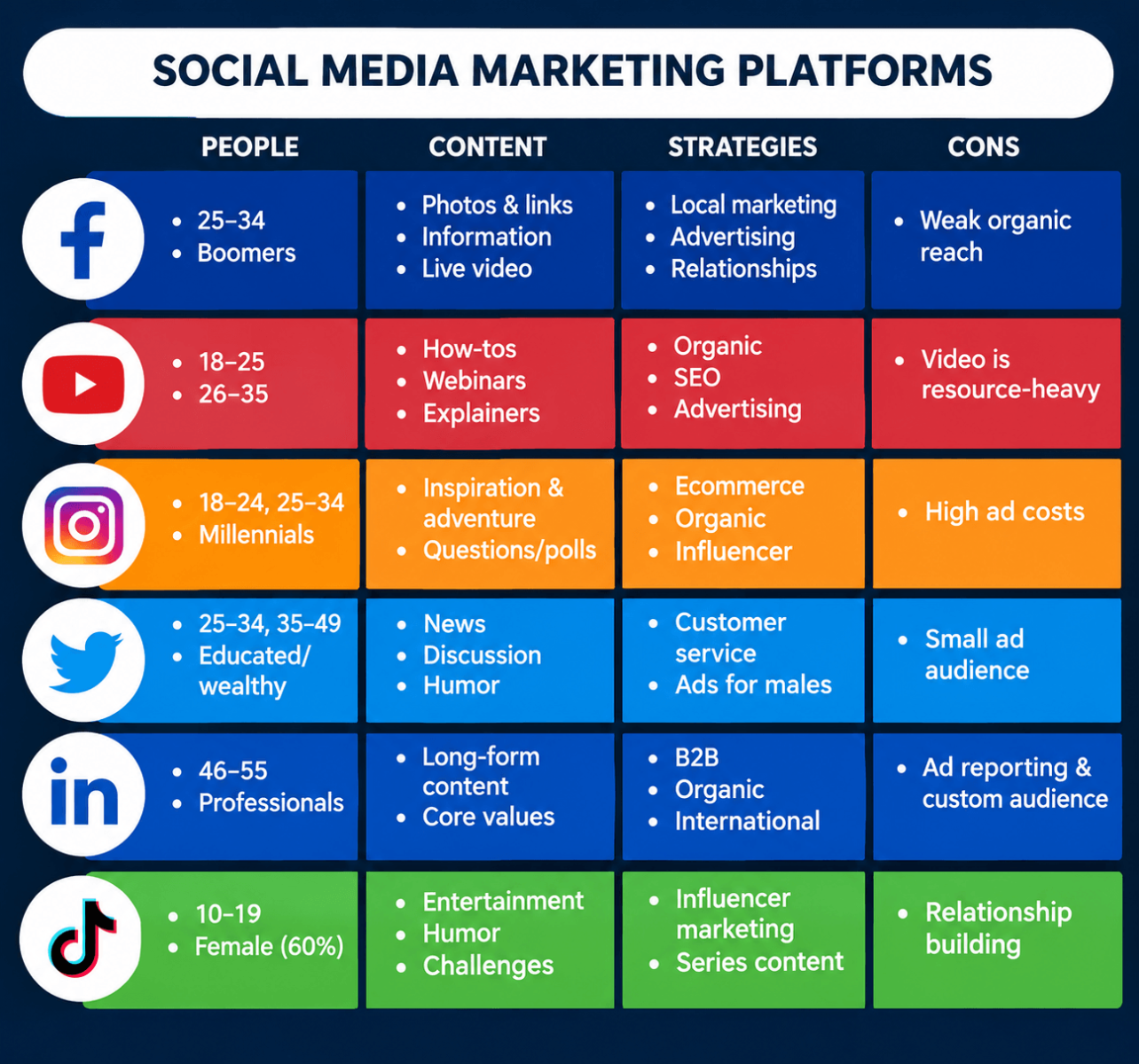
Each platform has a different audience and supports different goals. Choose the ones your customers already use, based on the product and the campaign objective.
1. Facebook Advertising
Facebook ads can appear in the feed, as video, as a carousel, and in other placements the platform offers.
They can support brand awareness, website traffic, lead generation, and sales. The targeting and campaign tools are useful for many kinds of businesses.
2. Instagram Advertising
Instagram is a visual platform. It supports image, video, carousel, and Stories ads.
It fits brands that depend on visual storytelling, product discovery, lifestyle content, and creator-led marketing.
3. LinkedIn Advertising
LinkedIn is often used for business-to-business (B2B) marketing and for reaching a professional audience.
Businesses can target professionals by available criteria such as job title, industry, company, and professional interests.
It fits business services, professional training, webinars, and industry-focused content.
4. TikTok Advertising
TikTok ads run as short-form video and through other campaign formats.
Brands use creative video to introduce a product, join a relevant trend, and reach people who watch short-form content.
5. YouTube Advertising
YouTube ads reach viewers through video placements.
They can support brand awareness, product demonstrations, educational content, and campaigns meant to drive a website visit or another action.
Benefits of Social Media Advertising for Businesses
Paid social helps when the campaign is built around a clear business goal.
1. Reach Specific Audiences
Platforms let you reach people based on relevant traits and interests. That is more focused than a broad promotion aimed at everyone.
2. Increase Brand Awareness
Paid campaigns can introduce a business to people who do not already follow it. Relevant ads, run consistently, make the brand easier to notice.
3. Generate Leads and Sales
You can ask people to send an inquiry, register for a service, visit a product page, or complete a purchase.
4. Control Advertising Budgets
Major platforms let you set a budget and manage spending. That makes it easier to test audiences and creative ideas.
5. Measure Campaign Performance
The reporting tools show how a campaign is doing. You can see which ads are working and which ones need a change.
6. Test Different Marketing Approaches
You can try different headlines, visuals, audience groups, and calls to action. Testing shows which combination performs better.
How to Create an Effective Social Media Advertising Strategy
Ads without a plan burn budget and disappoint. A simple structure helps you use the money more carefully.
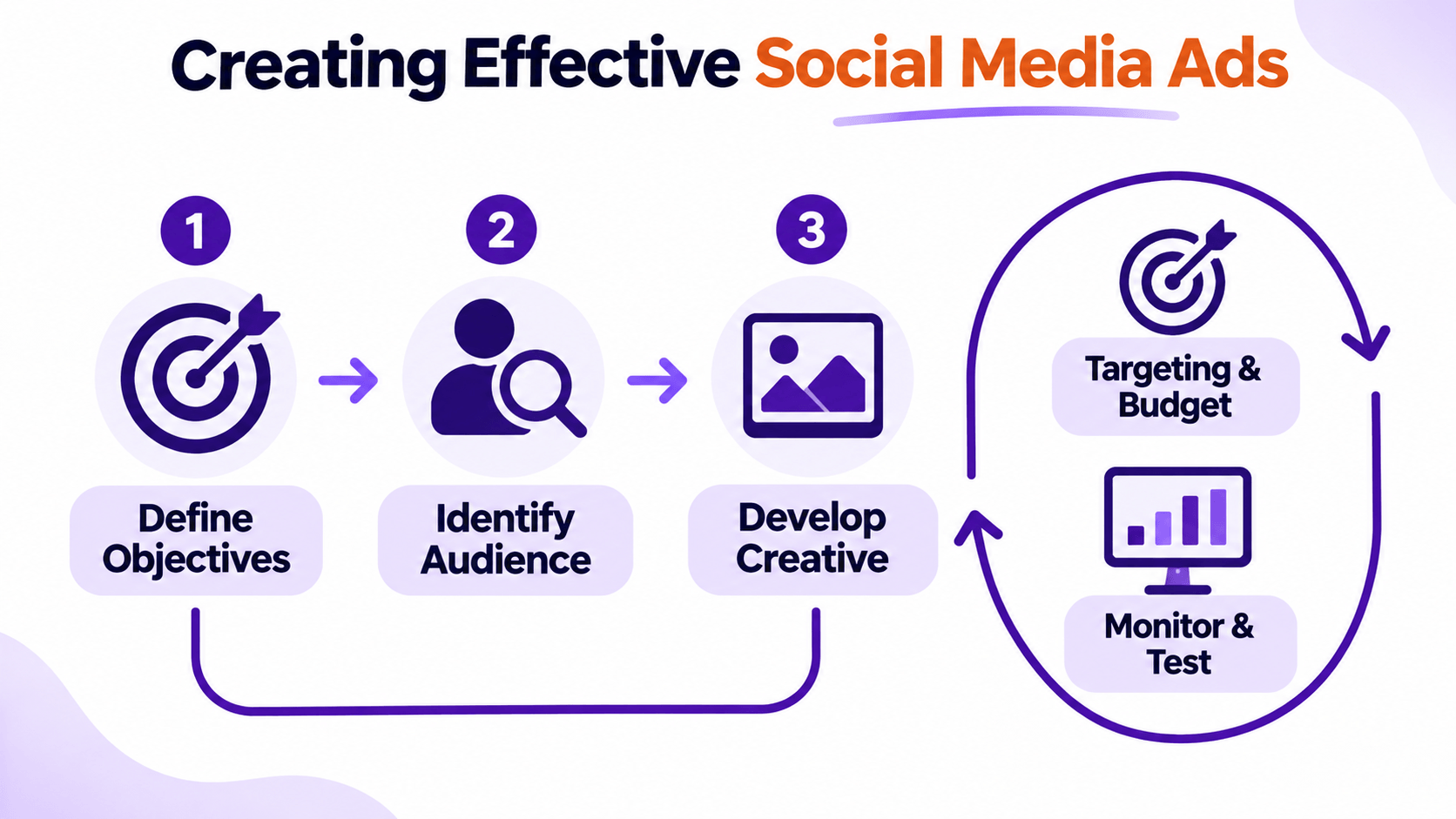
1. Define Clear Marketing Goals
Decide what success looks like. More website visitors, more purchases, qualified leads, or more people knowing the brand?
Make the goal specific and measurable. That is how you judge the campaign later.
2. Research Your Target Audience
Learn what your customers need, what they care about, and what gets in their way. A simple audience profile should guide the message and the targeting.
Also note which platforms they use and what kind of content they actually engage with.
3. Select the Right Platforms
Pick platforms that match the audience and the goal.
LinkedIn can be a fit for reaching business professionals. Instagram and TikTok are often a better fit for visual, consumer-focused campaigns.
4. Develop Compelling Ad Creatives
The ad should state a clear benefit. Use a relevant image or video, short copy, and a direct call to action.
The creative should match the audience, the platform, and the campaign goal.
5. Test Your Advertisements
Do not assume the first version is the best one. Test headlines, visuals, audience segments, and calls to action.
You can run two versions and see which message brings more qualified clicks or conversions.
6. Monitor and Optimize Performance
Check results on a regular schedule. See which ads are producing results and which ones are falling short.
Use that data to adjust the targeting, the creative, how the budget is split, and the campaign settings.
For a wider look at how paid ads fit a marketing plan, read our guide on how to build a winning digital marketing strategy from scratch.
Important Social Media Advertising Metrics to Track
Measuring performance tells you whether the ad spend is doing something useful.
Here are some important metrics to monitor:
- Impressions: The number of times an advertisement is displayed.
- Reach: The number of unique people who see an advertisement.
- Click-Through Rate (CTR): The percentage of impressions that result in clicks.
- Cost Per Click (CPC): The average amount paid for each ad click.
- Cost Per Lead (CPL): The average cost of generating a lead.
- Conversion Rate: The percentage of users who complete a desired action.
- Return on Ad Spend (ROAS): The revenue attributed to advertising compared with advertising expenditure.
Not every metric matters equally for every campaign. An awareness campaign may focus on reach and impressions. A sales campaign should focus on conversions and ROAS.
Learn more about reading campaign results in our article, Track Success: How to Measure Digital Marketing ROI.
Common Social Media Advertising Mistakes to Avoid
A well-funded campaign can still underperform when the planning and the follow-up are weak.
Targeting an Audience That Is Too Broad
Trying to reach everyone makes the ad less relevant. Define the audience from the product, the service, and the campaign goal.
Using the Same Creative Across Every Platform
Each platform has its own formats and its own expectations. Adapt the images, video, message, and call to action to the place the ad will run.
Ignoring Campaign Performance
Publishing an ad and never looking at it means you miss chances to improve it. Review the results and change what the data supports.
Focusing Only on Likes and Engagement
Likes and comments show that people engaged. They do not always mean the business got the result it wanted. Track the metrics tied to the campaign goal.
Not Testing Different Ad Variations
One creative or one message limits what you can learn. Test variations and use the results on the next campaign.
Skills Needed to Work in Social Media Advertising
This work mixes creative, analytical, and technical skill. You need to understand how people behave, how the ad platforms work, and how to read the results.
Important skills include:
- Audience research: Understanding customer needs, interests, and behavior.
- Campaign planning: Setting objectives, budgets, and advertising strategies.
- Ad copywriting: Creating persuasive headlines, descriptions, and calls to action.
- Creative development: Working with images, videos, and platform-specific ad formats.
- Paid advertising: Understanding campaign setup, targeting, bidding, and optimization.
- Analytics: Measuring campaign performance and interpreting results.
- AI-assisted marketing: Using appropriate AI tools to support research, content development, and campaign workflows.
Social media advertising also connects to the rest of digital marketing. SEO, content marketing, email marketing, and analytics help you build a fuller plan.
Learn Digital Marketing and Paid Advertising with WorkForce Institute
These skills can lead to work in digital marketing, campaign management, paid advertising, and social media strategy. Structured training helps you learn the ideas and practice them on assignments and projects.
Digital Marketing Bootcamp
The WorkForce Institute Digital Marketing Bootcamp is an 18-week, part-time online program for practical digital marketing skills.
The curriculum covers digital marketing foundations, social media and paid advertising, SEO, content marketing, email marketing, analytics, and AI-powered marketing workflows.
It includes hands-on work, capstone projects, portfolio development, and career preparation.
Explore the WFI Digital Marketing Bootcamp to see the curriculum and enrollment options.
Self-Paced Digital Marketing Course
If you want a flexible schedule, the WorkForce Institute Self-Paced Digital Marketing Course is online and you complete it on your own time.
The course covers digital marketing foundations, social media and paid advertising, SEO and content marketing, email marketing, analytics, and AI-powered marketing tools. It also includes practical exercises and guided projects.
Explore the Self-Paced Digital Marketing Course to see the format and the curriculum.
Frequently Asked Questions About Social Media Advertising
1. What is social media advertising in simple words?
It is paid promotion on platforms such as Facebook, Instagram, LinkedIn, TikTok, and YouTube. Businesses use it to reach a specific audience, promote a product or service, collect leads, and increase sales.
2. What are the most popular social media advertising platforms?
Facebook, Instagram, LinkedIn, TikTok, and YouTube are the ones people use most. The right platform depends on your audience, industry, goal, and the kind of content you can make.
3. What is the difference between social media marketing and social media advertising?
Social media marketing covers both organic and paid work used to build a presence and engage an audience. Social media advertising is the paid part: campaigns you pay a platform to deliver.
4. How much does social media advertising cost?
It depends on the platform, the audience, the competition, the goal, the bidding approach, and the budget you set. Businesses can usually set that budget around the money they have and what the campaign needs.
5. Which social media platform is best for advertising?
There is no single best platform for every business. Facebook and Instagram can support consumer campaigns. LinkedIn is often useful for B2B marketing. TikTok supports short-form video ads. YouTube is useful when the campaign is built around video.
6. How do you measure the success of a social media advertising campaign?
Look at reach, impressions, click-through rate, cost per click, leads, conversions, and return on ad spend. The metrics that matter depend on the campaign goal.
7. Do I need a digital marketing course to learn social media advertising?
You can learn the basics on your own. Structured training makes it easier to learn campaign planning, targeting, ad tools, creative work, analytics, and optimization in a clearer order.
Final Thoughts
Social media advertising lets a business reach a relevant audience, promote what it sells, and see how the campaign performed.
A good-looking image and a budget are only the start. Marketers still need to understand the audience, pick the right platforms, make ads that fit, and keep reading the results.
If you run a business and want the marketing to work harder, or you are building digital marketing skills, this is a practical place to start.
Explore the WFI Digital Marketing Bootcamp or the Self-Paced Digital Marketing Course to build practical skills for digital marketing work.


