Understanding AI Model Training
Artificial intelligence can feel hard to trust when its work happens behind a screen. Many people fear AI will remove jobs or make human skills less useful. That fear grows when terms like training data and model tuning feel unclear.
Yet AI model training follows steps that people can learn, test, and improve. For people exploring AI data analyst jobs, this knowledge can turn fear into a practical career plan.
AI systems do not teach themselves without rules or input. People choose the goal, select the data, test the results, and review errors. Human judgment remains central throughout the process. Learning how model training works can help you use AI with more skill and less fear.
What Is AI Model Training?
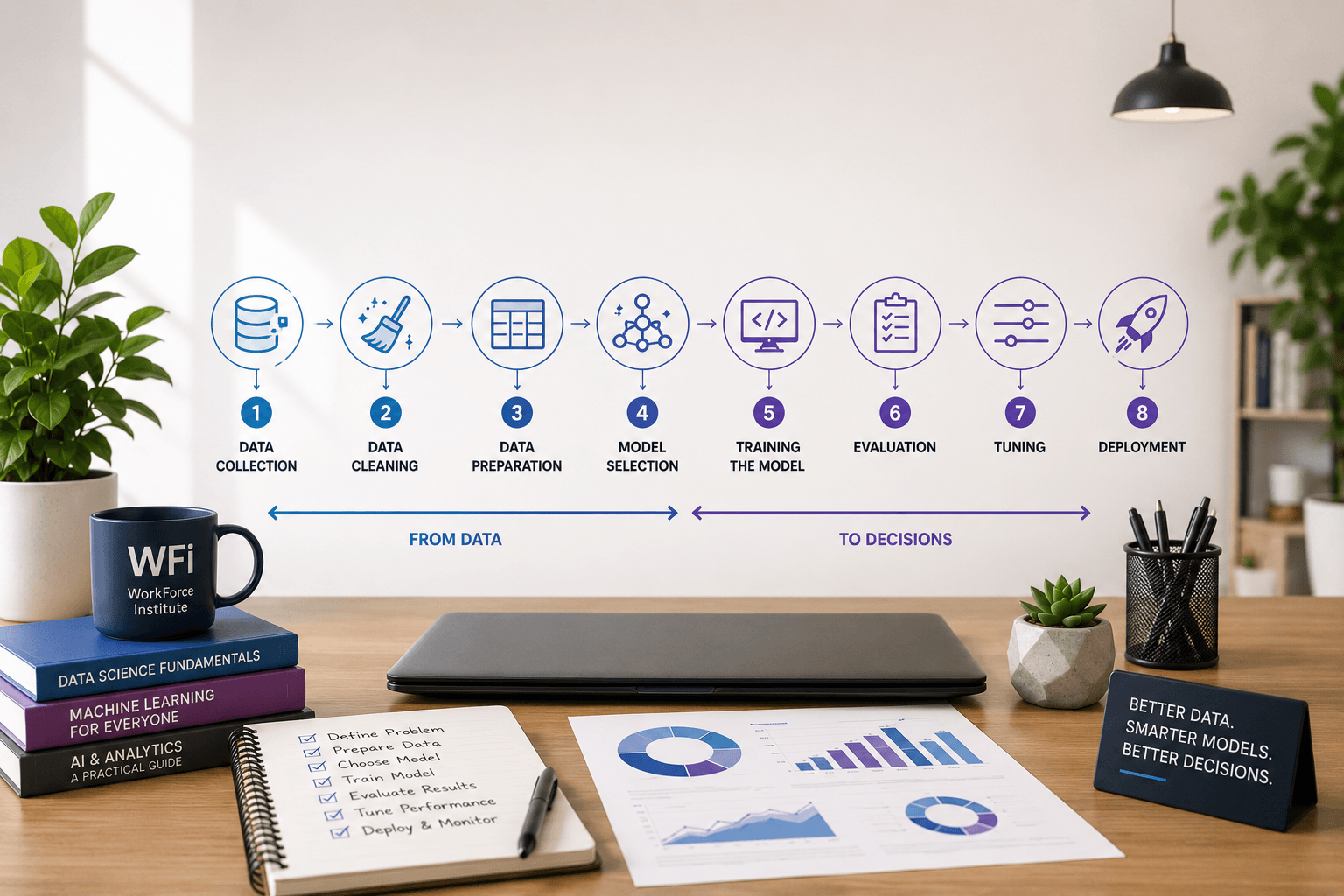
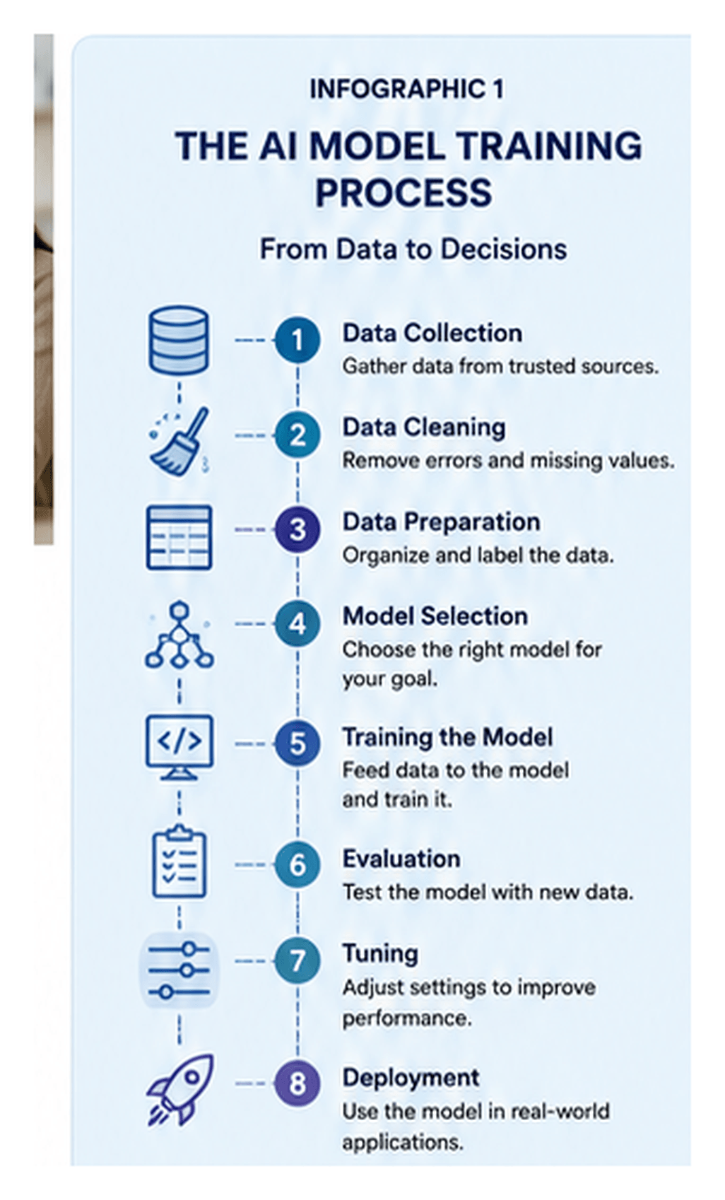
AI model training is the process of teaching software to find patterns in data. A model reviews examples and adjusts its settings after each round. It tries to reduce the gap between its answer and the correct answer. This repeated process helps the model make better guesses when it receives new data.
Think about teaching someone to sort apples, oranges, and bananas. You show clear examples with labels. Over time, the learner notices color, shape, and size. A trained model works in a similar way, though it uses numbers. Understanding this process helps candidates prepare for AI data analyst jobs.
Training does not give a model human thought or common sense. It helps the model match patterns from past examples. Poor data can produce weak, unfair, or false results. Strong training needs clear goals, sound tests, and human review.
IBM provides a useful overview of how machine learning models learn from data.
Why Model Training Matters for Data Analysts
Data analysts no longer work only with charts, formulas, and reports. Many teams now use AI to clean data, find trends, predict outcomes, and draft summaries. Analysts must know when those results are useful and when they are wrong. This shift creates new skill needs across AI data analyst jobs.
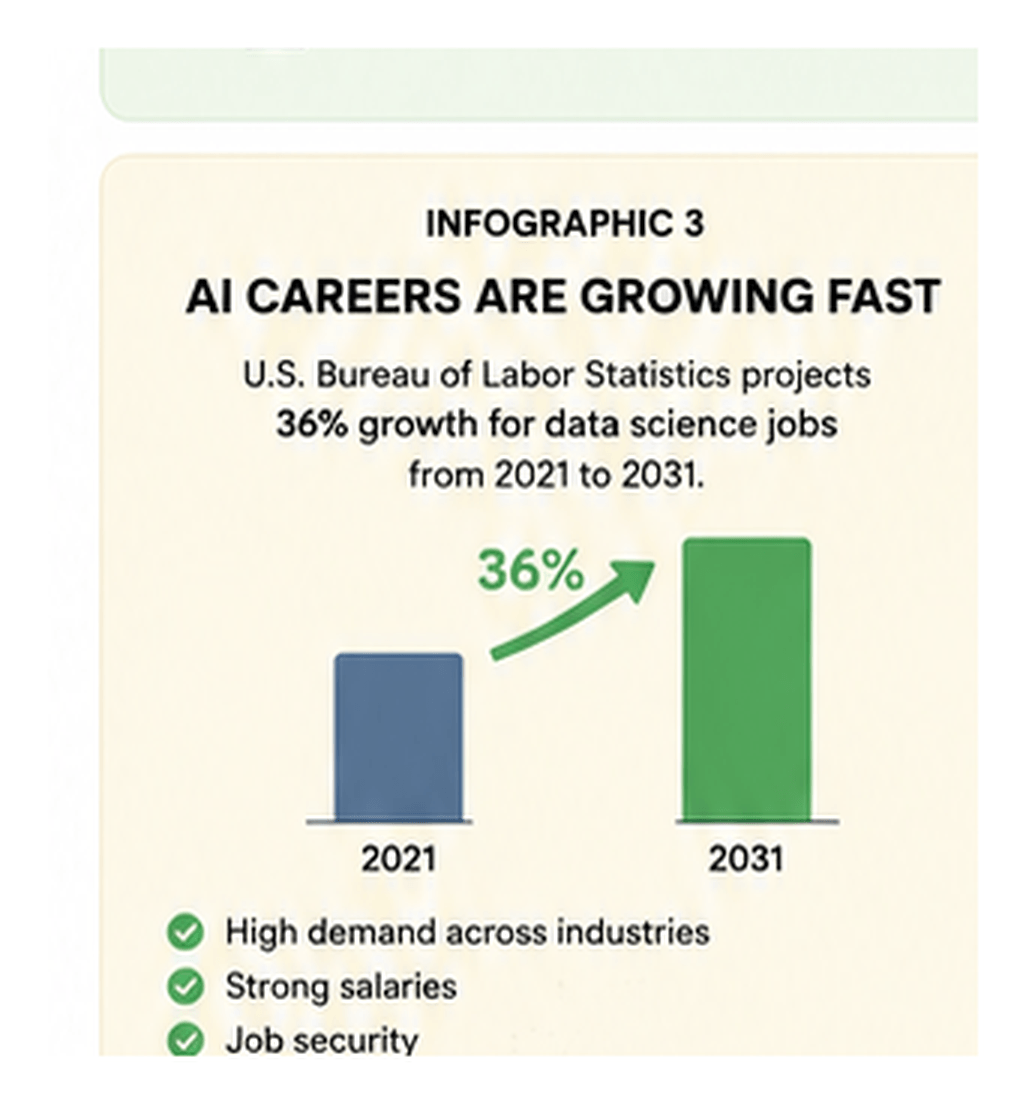
The U.S. Bureau of Labor Statistics says data scientists collect, sort, and study data. They also create, test, and update models. The agency projects data scientist jobs to grow much faster than the average for all U.S. jobs.
You can review the current BLS data scientist outlook here.
This growth does not mean every worker must become a data scientist. It does mean more teams need people who understand data, AI tools, model results, and business needs. Data analysts often help connect these areas.
Step 1: Define the Problem
Every model starts with a question. A team may want to predict customer loss, detect fraud, sort support requests, or estimate future sales. The question must be clear enough to measure. Vague goals lead to weak models because success has not been defined.
A data analyst helps turn a business need into a data task. The analyst may define the target, choose useful fields, and set a test method. This work is common in AI data analyst jobs because strong models begin with strong questions.
For example, “improve customer service” is too broad. A better goal may be “predict which support tickets need urgent help.” That question gives the team a clear result to measure.
The team must also decide how the model’s answer will be used. A model that flags urgent tickets may help staff respond faster. It should not make final choices without clear rules and human review.
Step 2: Collect and Prepare Data
Training data gives the model examples to learn from. Data may come from sales tools, surveys, apps, sensors, websites, or public records. Teams must ensure the data is allowed, useful, and tied to the task.
Raw data often contains missing values, repeated rows, spelling errors, and mixed formats. Analysts clean these issues before training begins. They may also create new fields that help the model find useful patterns. These tasks form a large part of AI data analyst jobs.
Data quality matters because models learn from what they receive. If the data is incomplete or unfair, the model may repeat those flaws. A large dataset is not always a good dataset. The data must match the real problem.
An analyst may need to remove duplicate records, correct date formats, group similar answers, or fill missing fields. Each choice can affect the model’s final results.
Step 3: Split the Data
Teams should not train and test a model on the same records. That would be like giving students the exam answers before the test. Instead, teams split the data into separate groups.
The training set teaches the model. The validation set helps compare settings during development. The test set checks the final model on examples it has not seen before.
Knowing how to split data is important for AI data analyst jobs. Analysts check whether each group reflects real users, seasons, regions, and customer types. A poor split can make a weak model look strong.
For example, a sales model trained only on summer data may fail during winter. A model trained on one region may also perform poorly in another. The data split should reflect the conditions the model will face after launch.
Google recommends keeping training, validation, and test data separate.
Step 4: Choose a Model
A model is the math method used to find patterns. Some models predict numbers. Others sort items into groups, detect unusual events, or create new text and images. The best choice depends on the question, data, risk, and need for clear reasons.
A simple model may beat a large model when teams need easy explanations. A more complex model may help with images, speech, or large text sets. People in AI data analyst jobs often compare several models instead of trusting the first result.
Common model types include linear regression, decision trees, random forests, and neural networks. You do not need to master every model at once. You need to understand what each model does and how to test it.
A team predicting monthly sales may use a different model from a team sorting customer comments. Choosing the wrong model can waste time and create poor results.
Cost also matters. Large models may need more computing power and may take longer to run. A smaller model may solve the same problem with fewer resources.
Step 5: Train the Model
During training, the model makes a guess and measures its error. A loss function gives that error a number. An optimizer changes the model’s settings to reduce the loss. The model repeats this cycle many times.
This is where AI data analyst jobs connect data work with model work. Analysts track results, compare runs, and note which changes helped. They also check whether gains are real or caused by a data mistake.
Training is not magic. It is a guided test process. People set the goal, choose the inputs, review the scores, and plan the next change.
Some models train in minutes. Others need far more time and computing power. The size of the data, model type, and task all affect the process.
The team must also decide when to stop training. Training for too long can cause a model to memorize the data. Stopping too early can leave the model unable to find useful patterns.
Step 6: Evaluate the Model
A model must do more than score well on training data. It must work on new cases. Teams use measures such as accuracy, precision, recall, and error rates. The right measure depends on the cost of each mistake.
For a fraud model, missing real fraud may cost more than checking a safe payment. For a medical model, a false result can affect care. This is why AI data analyst jobs require more than reading one score.
Accuracy shows how often the model is correct. Precision looks at how many positive results were correct. Recall measures how many true cases the model found. Each score answers a different question.
A good analyst asks what each score means for real people. A model can look strong on paper and still cause problems when used without care.
Step 7: Spot Overfitting and Underfitting
Overfitting happens when a model learns the training data too closely. It may score well during training but fail on new cases. Underfitting happens when the model is too simple to learn useful patterns.
Both problems matter in AI data analyst jobs. Analysts compare training and validation scores to spot warning signs. They may add data, remove weak fields, change settings, or choose another model.
A useful model must handle new records that match the real task. Strong results on old examples are not enough.
Overfitting can happen when a model is too complex for the amount of data available. Underfitting can happen when the model lacks useful inputs or training time. Testing helps teams find the right balance.
Imagine a student who memorizes every practice answer but cannot solve a new question. That student has not learned the main idea. An overfit model has the same problem.
Step 8: Check Bias and Fairness
AI can repeat unfair patterns found in data or work rules. Bias may also enter through the problem choice, labels, sampling, or use of results. A model can affect groups in different ways, even when the team did not plan that outcome.
This is one reason people remain essential. Teams must ask who is missing, who may face harm, and which errors matter most. In AI data analyst jobs, workers may test outcomes across groups and report gaps.
For example, a hiring model trained on old records may copy past hiring patterns. A lending model may perform poorly for groups with less data. These risks must be checked before the model affects real decisions.
Fairness checks do not guarantee perfect results. They help teams find risks before those risks affect more people.
Step 9: Tune and Improve the Model
Model tuning changes settings that guide learning. These settings may control learning speed, tree depth, or model size. Teams compare versions and choose the one that meets the goal with fewer risks.
More complex does not always mean better. A simpler model may cost less, run faster, and provide clearer reasons. People in AI data analyst jobs help compare these choices through tests and reports.
Analysts may also change the data, remove weak fields, or add better examples. Model improvement often comes from better data work, not only new code.
The goal is not to create the most complex model. The goal is to create a model that solves the right problem and performs well on new data.
Teams should record each change and the results it produced. This creates a clear history of how the model was built. It also helps others review the work later.
Step 10: Deploy and Monitor the Model
After testing, a team may place the model inside an app, report, or work process. The model receives live data and produces results. Work does not end at launch.
Data can change as customers, prices, products, and habits change. A model that worked last year may lose value today. Teams must track errors, speed, drift, and user feedback. Ongoing review creates steady work within AI data analyst jobs.
Model drift happens when live data no longer matches the data used during training. Teams may need to retrain the model, change the inputs, or stop using it.
A retail model may lose value when buying habits change. A fraud model may weaken when criminals use new methods. A support model may need updates when a company launches new products.
This work shows why AI still needs people after launch. Models need review, updates, and clear rules for use.
Should You Fear AI Model Training?
AI fear often comes from the idea that machines learn alone and replace people. In practice, people guide every major step. They choose the goal, collect data, set tests, review harm, and decide how results are used.
AI will change some tasks. It can speed up cleaning, code drafts, chart ideas, and first reports. It can also make errors that sound sure and correct. Workers who can check AI output become more useful.
That is the better frame for AI data analyst jobs. You are not learning to beat AI. You are learning to direct it, test it, and explain it. Those skills help teams use AI with sound judgment.
AI fear can become a signal to learn. The people who understand AI can help set better rules, catch errors, and guide sound use.
AI does not remove the need for human thought. It increases the need for people who can question results and explain risks.
What Skills Do Employers Need?
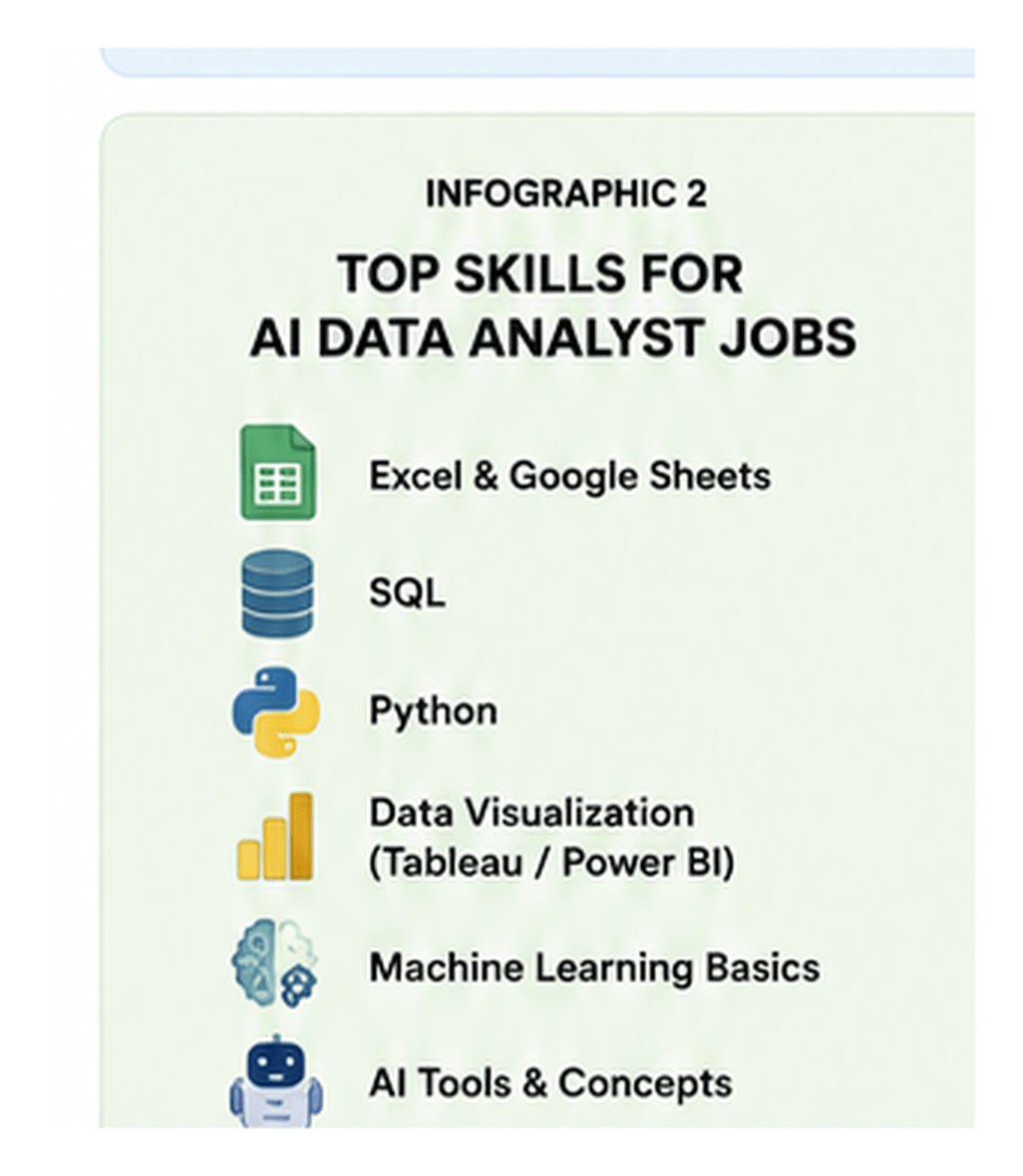
Strong candidates can clean data, read charts, explain basic statistics, and ask clear questions. They should understand training, testing, bias, and model limits. Python, SQL, spreadsheets, and data charts can support the work.
Soft skills still matter across AI data analyst jobs. Analysts must explain results to people who do not write code. They must state limits in plain words and challenge weak claims.
Problem solving, clear writing, teamwork, and curiosity are also important. Employers need people who can connect data results to real goals.
You do not need to know every tool before applying. You need a strong base, proof of practice, and the ability to explain your work.
A strong portfolio can show employers how you solved a data problem. It may include charts, reports, model tests, and notes about your choices.
How Can a Beginner Learn AI Model Training?
You do not need prior AI or coding experience to start learning. A clear course can help you build skills in the right order and practice them through guided projects.
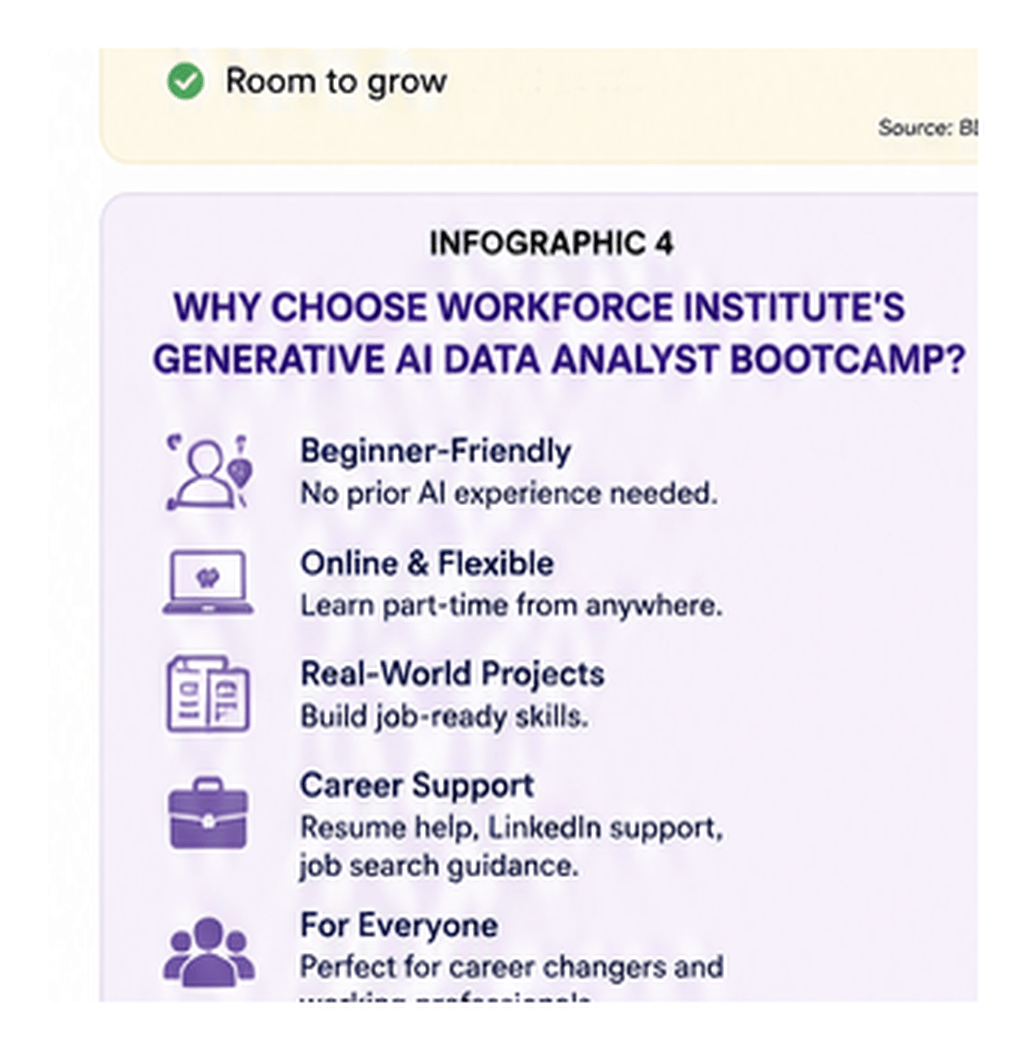
The WorkForce Institute Generative AI Data Analyst Bootcamp is designed for people who want a guided route into AI and data work. It supports beginners, career changers, and working adults who need a flexible study plan.
This makes it a practical beginner-friendly bootcamp, part-time online bootcamp, and bootcamp for working professionals. It may also suit people seeking the best online bootcamp for career change based on schedule, support, project work, and career goals.
The program covers data analysis, AI tools, model training, testing, data charts, and job-ready projects. These topics connect model theory with the tasks found in AI data analyst jobs.
Students can learn how to prepare data, find patterns, test results, and explain what those results mean. This makes the training useful for both technical and business settings.
Why Structured Training Helps Career Changers
Free lessons can explain single tools, but they may not form a clear path. Career changers often need order, deadlines, feedback, projects, and job support. A set plan makes it easier to connect each skill.
The WorkForce Institute bootcamp gives students a structured learning path. Students can build practical work, learn from instructors, and prepare examples for a portfolio.
That support can help students prepare for AI data analyst jobs. A portfolio can show how you cleaned data, tested a model, built a chart, or explained a result.
Career support can also help with resumes, interviews, and job search plans. These services matter when you are moving into a new field and need to explain your past experience.
A teacher may bring strong speaking and planning skills. A marketer may understand customers and reports. A finance worker may already know spreadsheets and trends. Career changers can connect these past skills to new AI work.
Who Can Benefit From the Bootcamp?
The program can help people from many work backgrounds. You may be a recent graduate, a current analyst, a manager, or someone moving from another field.
Working adults may value a part-time online bootcamp that fits around job and family needs. Beginners may value a clear path that starts with basic ideas. Career changers may need projects that show employers what they can do.
A bootcamp for working professionals should make learning easier to plan. It should also help students use new skills before completing the full program.
The WorkForce Institute bootcamp is positioned as a practical route for students who want to enter AI careers without returning to college for several years.
Questions to Ask Before You Enroll
Ask whether the course teaches data cleaning, statistics, training, testing, bias, and model tuning. Check whether you will use real data and finish projects. Ask how often instructors meet students and what career support includes.
Also check the weekly hours, total cost, refund terms, and payment choices. The right course should fit your work and family needs. It should help you explain your skills during interviews for AI data analyst jobs.
A strong course should also show how each topic connects to real work. You should know what you will build, which tools you will use, and how your work will be reviewed.
Ask whether the program supports beginners. Check whether lessons start with core data skills before moving into model work. A true beginner-friendly bootcamp should not assume that every student has a coding background.
The Generative AI Data Analyst Bootcamp brings these areas together in one learning path.
Turn AI Fear Into a Career Skill
AI model training is a process people can understand. Models learn from data, make errors, receive updates, and face tests. Human choices shape every stage.
For people exploring AI careers, this knowledge can replace fear with action. You can learn how models work, where they fail, and how to use them with care.
These skills can support a move into AI data analyst jobs across many U.S. industries. They also help candidates explain why human judgment still matters.
The future of work will include people using AI tools, reviewing AI results, and improving how those tools perform. Workers who build these skills can take part in that change.
You do not need to become an AI expert overnight. You can start with data basics, build small projects, and add more skills over time.
Enroll in the Generative AI Data Analyst Bootcamp
AI is changing how teams use data, but people still guide the process. Employers need workers who can prepare data, test results, find errors, and explain what a model means.
The right training can help you build those skills with less guesswork. It can also give you the projects and support needed to start a new career path.
The WorkForce Institute Generative AI Data Analyst Bootcamp gives beginners a guided route into this work. You can study part time, complete practical projects, receive support, and prepare for interviews.
Instead of viewing AI as a threat, learn how to work with it. Build the skills needed to guide AI systems and help teams make better choices.
Enroll in the WorkForce Institute Generative AI Data Analyst Bootcamp today. Build the skills to train, test, improve, and explain AI models with confidence.