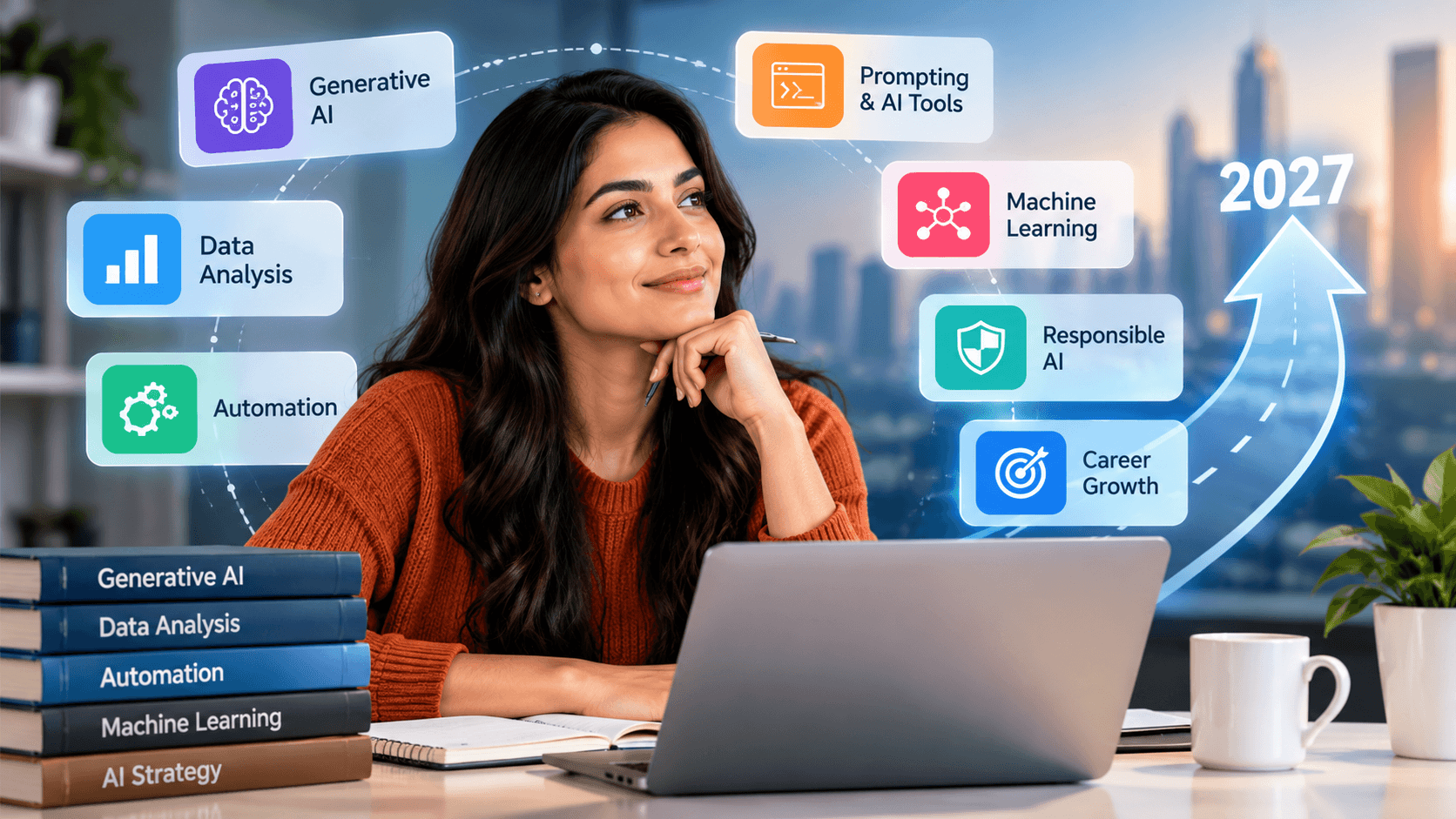
Artificial intelligence is changing how people work, solve problems, analyze information, and develop digital products. From generative AI assistants to machine learning systems and workflow automation, AI is becoming part of many professional roles. For anyone planning their career, learning how to work effectively with AI can be a valuable step toward staying adaptable in a changing job market.
However, learning AI does not mean everyone needs to become a machine learning engineer or learn advanced programming. The most useful skills depend on your current experience, career goals, and the problems you want to solve.
In this guide, we explore the AI skills worth developing in 2027, explain how they apply to different careers, and outline a practical learning roadmap for beginners and experienced professionals.
Why AI Skills Matter in 2027
Organizations use AI in a growing range of activities, including content creation, customer support, software development, data analysis, research, and business operations. Professionals who understand how to use these tools responsibly can identify opportunities to improve their work and make better-informed decisions.
AI skills are not limited to technical specialists. Marketers may use AI to analyze campaign performance, analysts may use it to explore data, software engineers may use AI coding assistants, and project managers may use AI to summarize information and support planning.
At the same time, using AI effectively requires more than knowing which tool to open. Professionals need to evaluate outputs, protect sensitive information, understand limitations, and recognize when human judgment is essential.
WFI has also explored the relationship between workforce demand and AI capabilities in its article on the AI skills gap and hiring challenges.
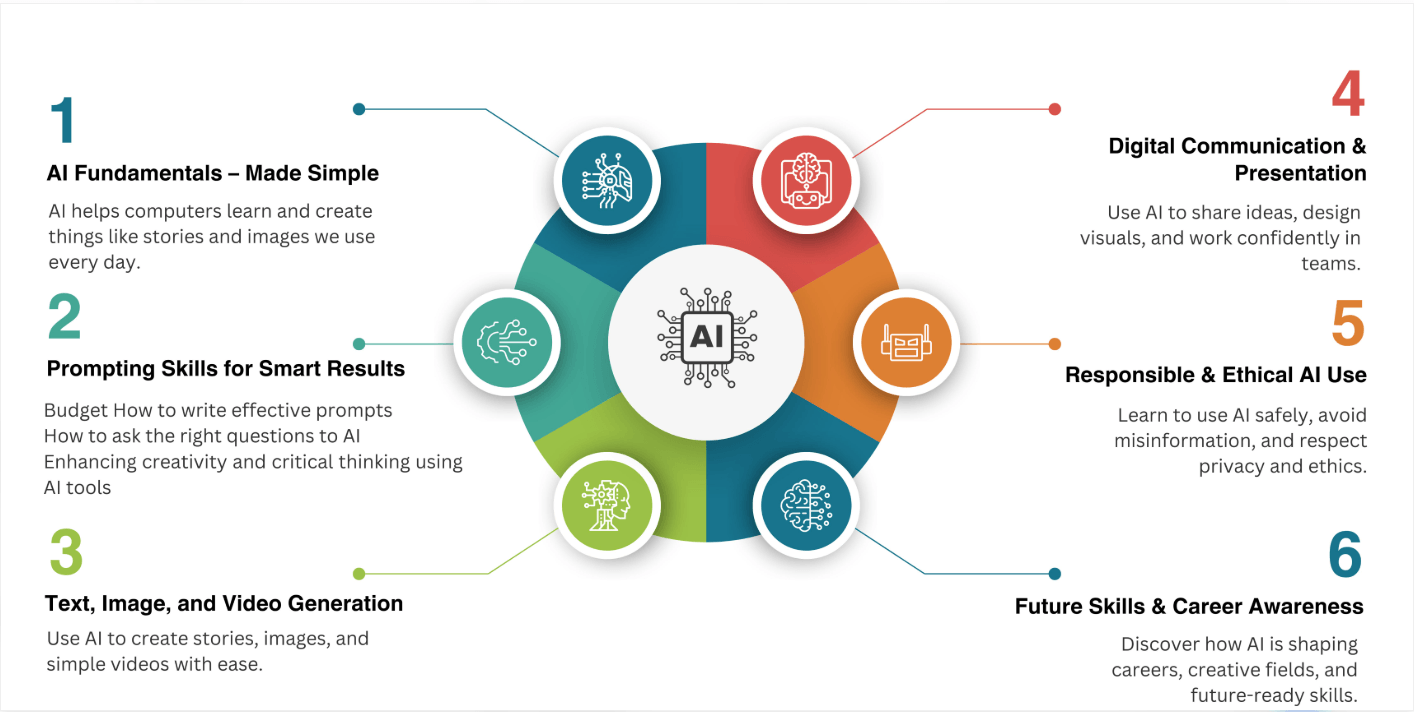
10 AI Skills to Learn in 2027
1. Generative AI Literacy
Generative AI literacy means understanding how tools that generate text, images, code, summaries, and other content work at a practical level. It includes knowing what these systems can do, where they may produce incorrect information, and how to review their outputs.
Professionals should learn how to use generative AI for appropriate tasks while checking facts, context, and quality before relying on the results.
What to learn:
- Common uses and limitations of generative AI.
- How to evaluate AI-generated content.
- How to refine prompts and provide useful context.
- When human review is necessary.
Useful for: Marketing professionals, business teams, project managers, educators, analysts, and many other knowledge workers.
2. Prompting and AI Communication
Prompting is the process of giving an AI system instructions and context to produce a useful result. Effective prompting involves explaining the task, supplying relevant information, setting constraints, and defining the desired format.
For example, a marketer might ask an AI tool to organize campaign ideas by audience and objective. A project manager might request a draft risk register based on project details. In both cases, the quality of the input and the review process affect the usefulness of the output.
What to learn:
- Writing clear instructions and specifying the intended audience.
- Providing relevant background and source material.
- Breaking complex tasks into manageable steps.
- Reviewing and refining AI-generated results.
Useful for: Professionals who use AI assistants for research, writing, planning, analysis, or problem-solving.
3. Data Literacy and Data Analysis
Data literacy is the ability to understand, interpret, and communicate information from data. As AI tools make some analytical tasks more accessible, professionals still need to understand what the data represents and whether the conclusions are reliable.
Important foundations include spreadsheets, data visualization, basic statistics, data quality, and interpreting trends. More advanced roles may require SQL, Python, statistical methods, or specialized analytics tools.
What to learn:
- Working with spreadsheets and structured data.
- Understanding charts, metrics, and basic statistics.
- Identifying missing, inconsistent, or misleading data.
- Validating AI-assisted analysis against the original data.
Useful for: Business analysts, marketing analysts, operations professionals, researchers, and aspiring AI data analysts.
To explore how these skills apply to a specific career, read WFI's guides on what an AI data analyst actually does and the skills companies expect from AI data analysts.
4. AI and Workflow Automation
Automation involves using technology to reduce repetitive work or connect steps in a process. AI can extend some workflows by helping classify information, summarize documents, extract relevant details, or generate draft responses.
Professionals should first understand the process they want to improve. Automating an unclear or inefficient workflow may simply make the underlying problem happen faster.
What to learn:
- Mapping repetitive tasks and identifying bottlenecks.
- Using suitable automation and AI tools.
- Connecting workflow steps and defining review points.
- Testing outputs, handling errors, and monitoring results.
Useful for: Operations teams, business professionals, project managers, customer-support teams, and digital marketers.
5. Machine Learning Fundamentals
Machine learning is a branch of AI in which systems learn patterns from data to perform tasks such as prediction, classification, or recommendation. Not every AI user needs to build machine learning models, but understanding the fundamentals can help professionals make better technical and business decisions.
For more technical roles, machine learning knowledge may include training and testing data, model evaluation, overfitting, and the limitations of predictive systems.
What to learn:
- The difference between AI, machine learning, and generative AI.
- Basic concepts of training and testing data.
- Common model evaluation methods.
- How data quality and bias can affect results.
Useful for: Aspiring AI engineers, data professionals, technical product managers, and people interested in deeper AI study.
For a foundational introduction, see WFI's beginner's guide to AI model training.
6. AI-Assisted Software Development
AI coding assistants can help developers explore code, draft functions, explain errors, generate tests, and document software. However, generated code can contain bugs, security weaknesses, or incorrect assumptions, so developers need to understand how to review and test it.
Learning AI-assisted development should complement programming fundamentals rather than replace them.
What to learn:
- Programming fundamentals and code readability.
- Using AI tools to understand and draft code.
- Testing, debugging, and reviewing generated code.
- Security, dependency management, and version control.
Useful for: Developers, software engineering students, technical professionals, and people preparing for AI engineering roles.
Professionals interested in this pathway can explore WFI's AI for Software Engineers Bootcamp.
7. AI Ethics, Privacy, and Responsible Use
AI tools can create risks when they handle sensitive information, generate misleading content, reflect bias, or are used without appropriate oversight. Responsible AI skills help professionals recognize these risks and make better decisions about when and how to use AI.
Requirements vary by organization and use case, especially when AI affects important decisions about people, finances, employment, or access to services.
What to learn:
- Protecting confidential and personal information.
- Recognizing bias and potentially misleading outputs.
- Verifying important claims and sources.
- Understanding human oversight and accountability.
- Following organizational policies and applicable regulations.
Useful for: Anyone using AI at work, especially professionals working with customer data, business decisions, or sensitive information.
8. Critical Thinking and AI Output Evaluation
AI systems can produce convincing answers that are incomplete, outdated, or incorrect. Critical thinking helps professionals evaluate whether an output makes sense, whether the evidence supports it, and whether further research is needed.
This skill is especially important when AI is used for research, reporting, analysis, technical work, or customer-facing communication.
What to learn:
- Checking facts against reliable sources.
- Distinguishing evidence from assumptions.
- Identifying gaps and contradictions in AI-generated results.
- Comparing alternative explanations and solutions.
- Knowing when to consult a subject-matter expert.
Useful for: All professionals who rely on AI-generated information or recommendations.
9. AI Product and Project Management
AI projects require people who can connect business goals with technical work. Product and project managers may need to define use cases, set priorities, coordinate teams, evaluate risks, and measure whether an AI solution delivers value.
They do not always need to develop models themselves, but they benefit from understanding AI capabilities, limitations, costs, and evaluation requirements.
What to learn:
- Identifying suitable AI use cases.
- Defining requirements and measurable outcomes.
- Collaborating with technical and business teams.
- Managing project risks and stakeholder expectations.
- Evaluating performance after implementation.
Useful for: Product managers, project managers, business analysts, and professionals moving into AI-related leadership roles.
Explore WFI's AI-Powered Project Manager Bootcamp to learn more about its relevant training pathway.
10. Domain Expertise and Problem-Solving
AI skills are most valuable when they are applied to meaningful problems. A marketing professional who understands customer behavior can better evaluate AI-generated campaign ideas. A data analyst who understands business metrics can interpret results more effectively. A software engineer can judge whether generated code meets the requirements of a system.
Domain expertise helps professionals identify useful applications, recognize errors, and assess whether an AI solution addresses the actual problem.
What to learn:
- Deepen your knowledge of your industry or profession.
- Identify recurring problems and opportunities for improvement.
- Learn the relevant tools and workflows used in your field.
- Practice evaluating AI solutions against real-world needs.
Useful for: Professionals in every field, from marketing and education to finance, healthcare, engineering, and operations.
Which AI Skills Should You Learn for Your Career?
You do not need to master every AI skill at once. Start with the capabilities most relevant to your current role or the career you want to pursue.
| Career Path | Skills to Prioritize | Suggested Practice |
|---|---|---|
| Digital Marketing | Generative AI, prompting, data analysis, automation, critical thinking | Analyze a campaign, draft content variations, and compare results against campaign goals. |
| Data Analytics | Data literacy, statistics, AI-assisted analysis, data quality, visualization | Analyze a dataset, create a visualization, and validate the conclusions. |
| Software Engineering | Programming, AI-assisted coding, testing, debugging, machine learning fundamentals where relevant | Build a small application and test any AI-generated code carefully. |
| Project Management | AI literacy, workflow automation, communication, risk assessment, evaluation | Map a repetitive project task and test whether AI can improve the workflow. |
| Product Management | AI use-case assessment, customer research, data literacy, evaluation, responsible AI | Write a product brief for an AI feature, including success metrics and risks. |
| Business and Operations | Generative AI, prompting, automation, data interpretation, privacy awareness | Improve one routine workflow and measure whether the change saves time or improves quality. |
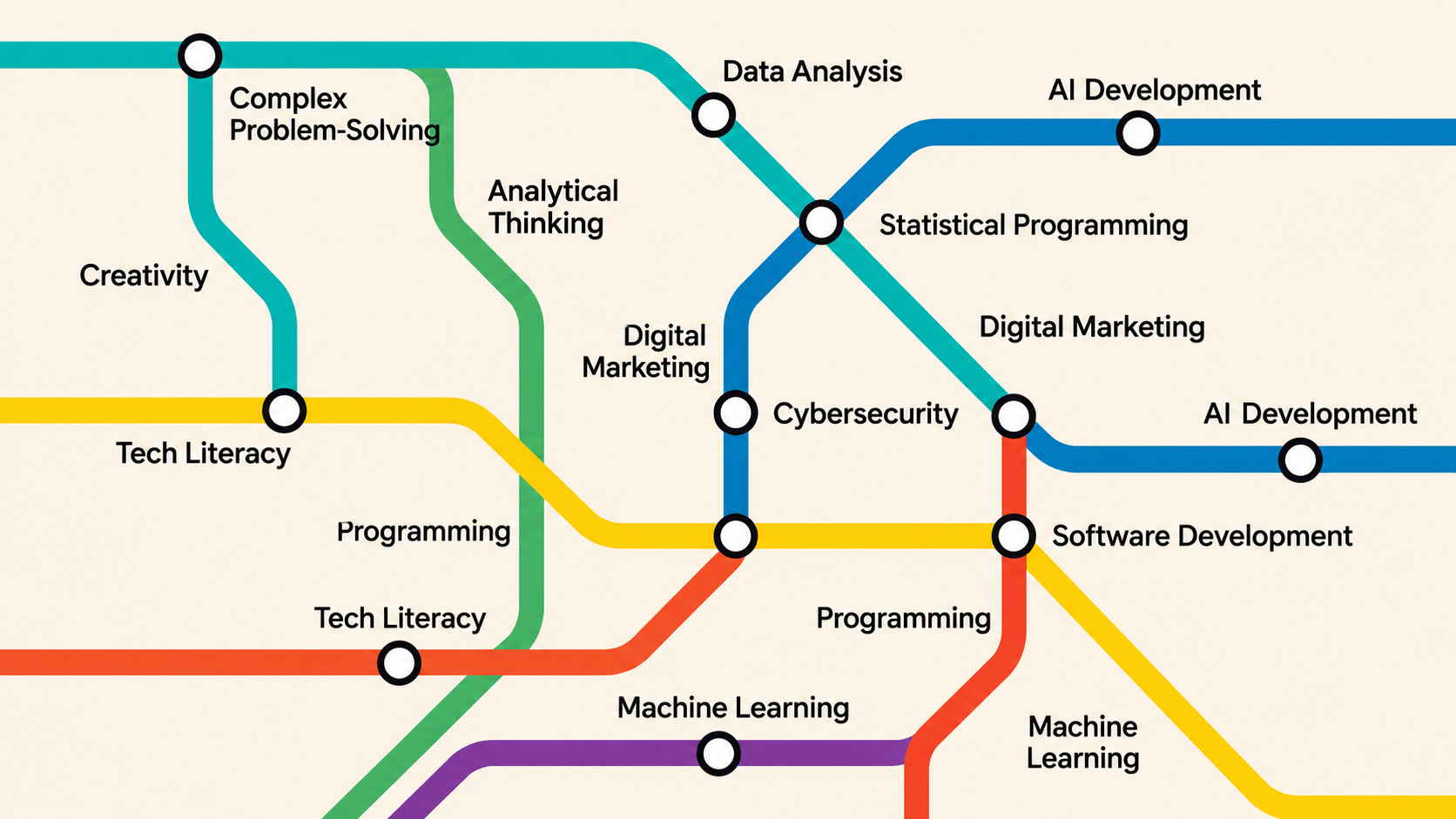
A Practical Roadmap to Learn AI Skills in 2027
A structured plan can make AI learning more manageable. Adjust the pace to your experience, available time, and career goals.
Step 1: Assess Your Current Skills
Identify the tasks you perform regularly and the problems you want to solve. Decide whether your immediate goal is to use AI more effectively in your current job or prepare for a more technical role.
Step 2: Build AI Fundamentals
Learn the basic differences between generative AI, machine learning, and automation. Practice using an appropriate AI tool and evaluate its results rather than accepting every output at face value.
Step 3: Choose a Career-Specific Skill
Select one area to develop further, such as data analysis, AI-assisted development, marketing automation, or AI project management. Focus on skills that connect directly to the work you want to do.
Step 4: Complete a Practical Project
Apply what you have learned to a realistic task. Examples include analyzing a public dataset, creating a simple automation, testing an AI-assisted coding workflow, or preparing a product brief for an AI feature.
Step 5: Evaluate and Document the Results
Record the problem, the tools used, the decisions you made, and the outcome. Explain what worked, what failed, and how you verified the result. A well-documented project can help demonstrate practical skills to employers.
Step 6: Keep Learning and Reviewing
AI tools and workflows change over time. Review new capabilities carefully, strengthen your foundational knowledge, and focus on transferable skills rather than relying on a single tool or trend.
Common Mistakes to Avoid When Learning AI
- Trying to learn everything at once: Choose a clear career goal and build relevant skills progressively.
- Relying on AI without verification: Check facts, calculations, code, and recommendations before using them.
- Ignoring foundational knowledge: AI tools are more useful when you understand the subject and can judge the results.
- Collecting certificates without practical experience: Apply your learning through projects and document what you can do.
- Overlooking privacy and security: Do not enter confidential or sensitive information into tools unless their use is authorized.
- Following every new tool trend: Prioritize durable skills and choose tools that solve real problems.
How to Choose the Right AI Learning Program
A suitable learning program should match your current experience and the role you want to pursue. Before enrolling, review the curriculum, prerequisites, practical exercises, instructor support, and expected learning outcomes.
For a technical career, look for appropriate foundations in programming, data, model evaluation, and software development. For a business-focused role, prioritize practical AI use cases, workflow improvement, data interpretation, and responsible use.
WFI offers several program pathways that may be relevant depending on your goals, including AI for Software Engineers, the Generative AI Data Analyst program, and the AI-Powered Project Manager Bootcamp. Review each program's curriculum to determine which best fits your background and learning objectives.
Frequently Asked Questions
What are the most important AI skills to learn in 2027?
Useful skills include generative AI literacy, prompting, data analysis, workflow automation, critical thinking, responsible AI use, and domain-specific problem-solving. Technical professionals may also need programming and machine learning fundamentals.
Can I learn AI skills without a technical background?
Yes. Many practical AI skills do not require advanced programming. Beginners can start with AI literacy, prompting, output evaluation, and tools relevant to their work before progressing to more technical topics if needed.
Do I need to learn coding to work with AI?
Not for every role. Coding is important for many AI engineering and software development positions, while business, marketing, project management, and other roles may focus more on AI tools, data literacy, workflow design, and evaluation.
How can I demonstrate my AI skills to employers?
Build practical projects that solve a clear problem. Document your process, explain how you verified the results, and describe the value or limitations of the solution. Avoid claiming that AI-generated work was entirely your own without explaining your contribution.
Are AI tools enough to build a career in AI?
Knowing AI tools is a useful starting point, but a strong career also requires relevant domain knowledge, problem-solving, communication, and the ability to evaluate results. More technical positions may require additional programming, mathematics, data, or engineering skills.
Final Thoughts
Learning AI skills in 2027 is not about mastering every new tool. It is about understanding how AI works, identifying where it can help, evaluating its outputs, and applying it responsibly to real problems.
Start with the skills that match your career goals, build a strong foundation, and practice through projects that demonstrate what you can do. By combining AI literacy with domain expertise and critical thinking, you can prepare for a range of evolving professional opportunities.