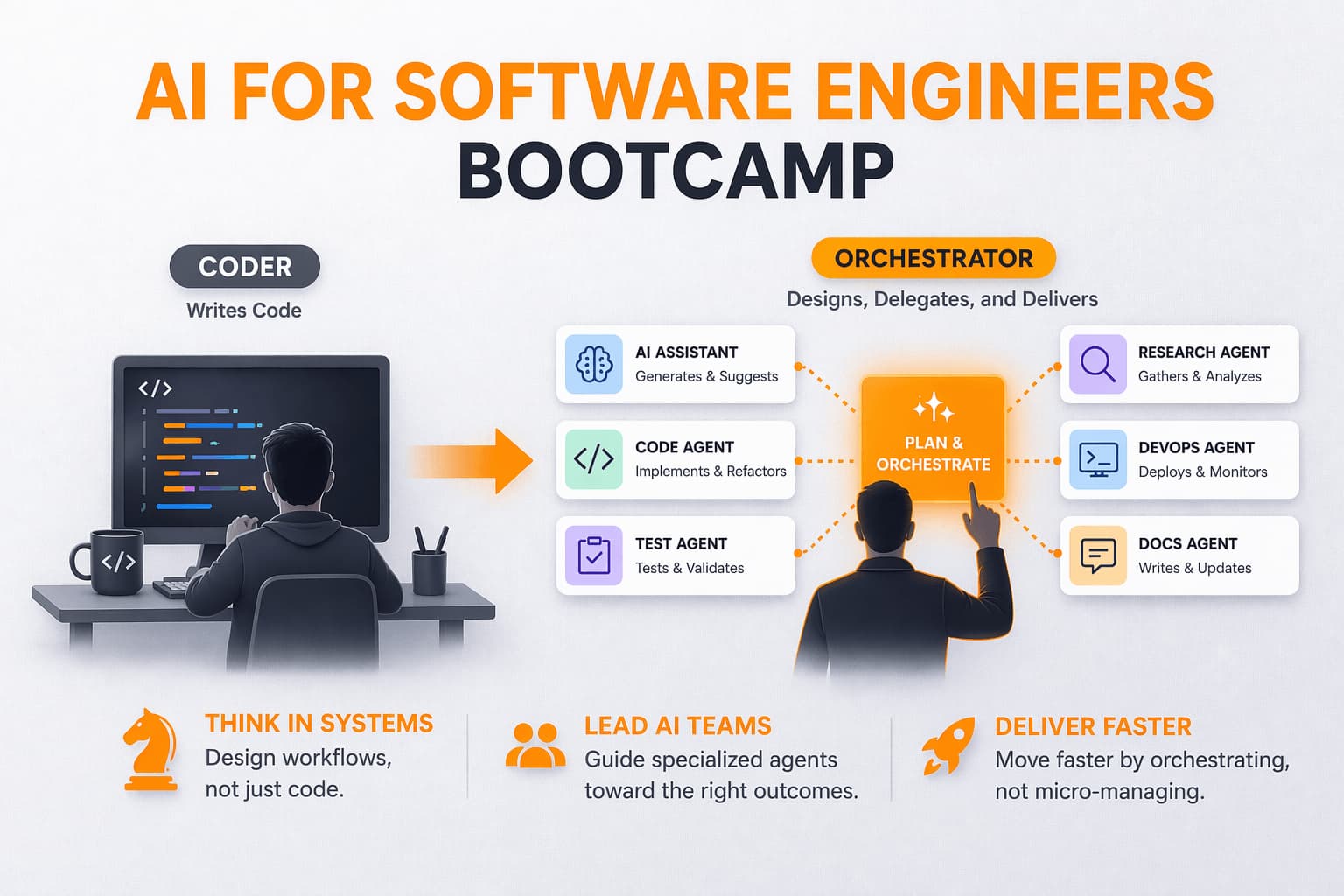
The Rise of the Agentic Engineer: Moving from Coder to Orchestrator
Software work is changing fast. The role of the engineer is no longer only about writing code. It is about guiding systems that write, test, and improve code on their own. This shift is called Agentic Software Engineering, and it is changing how teams build products.
In this new model, engineers do not work alone. They work with AI agents that can plan, build, test, and deploy software. These agents act like team members. They take tasks, follow instructions, and improve with feedback. Engineers now act as leaders of these systems. This is the core idea behind Agentic Software Engineering.
This shift is not small. It changes how work gets done. It also changes which skills matter most. In Agentic Software Engineering, the engineer becomes an orchestrator. They guide many moving parts instead of writing every line of code. This creates a new type of builder.
The result is faster output and better systems. Teams can build in hours what once took weeks. This is why Agentic Software Engineering is becoming a key skill for AI engineers and developers. It allows people to move faster without losing control.
Companies are already seeing results. Teams using AI-assisted workflows report faster builds and fewer errors. This shows how Agentic Software Engineering is shaping the future of work. The change is clear across many industries. The rise of this model also changes career paths. Engineers who adapt early gain a strong edge. They can lead projects and guide systems at scale. This is why learning Agentic Software Engineering matters today.
At WorkForce Institute, we focus on helping learners build real skills for this shift. The goal is simple. Help engineers move from coder to orchestrator through Agentic Software Engineering.
Source: McKinsey AI Productivity Report – https://www.mckinsey.com
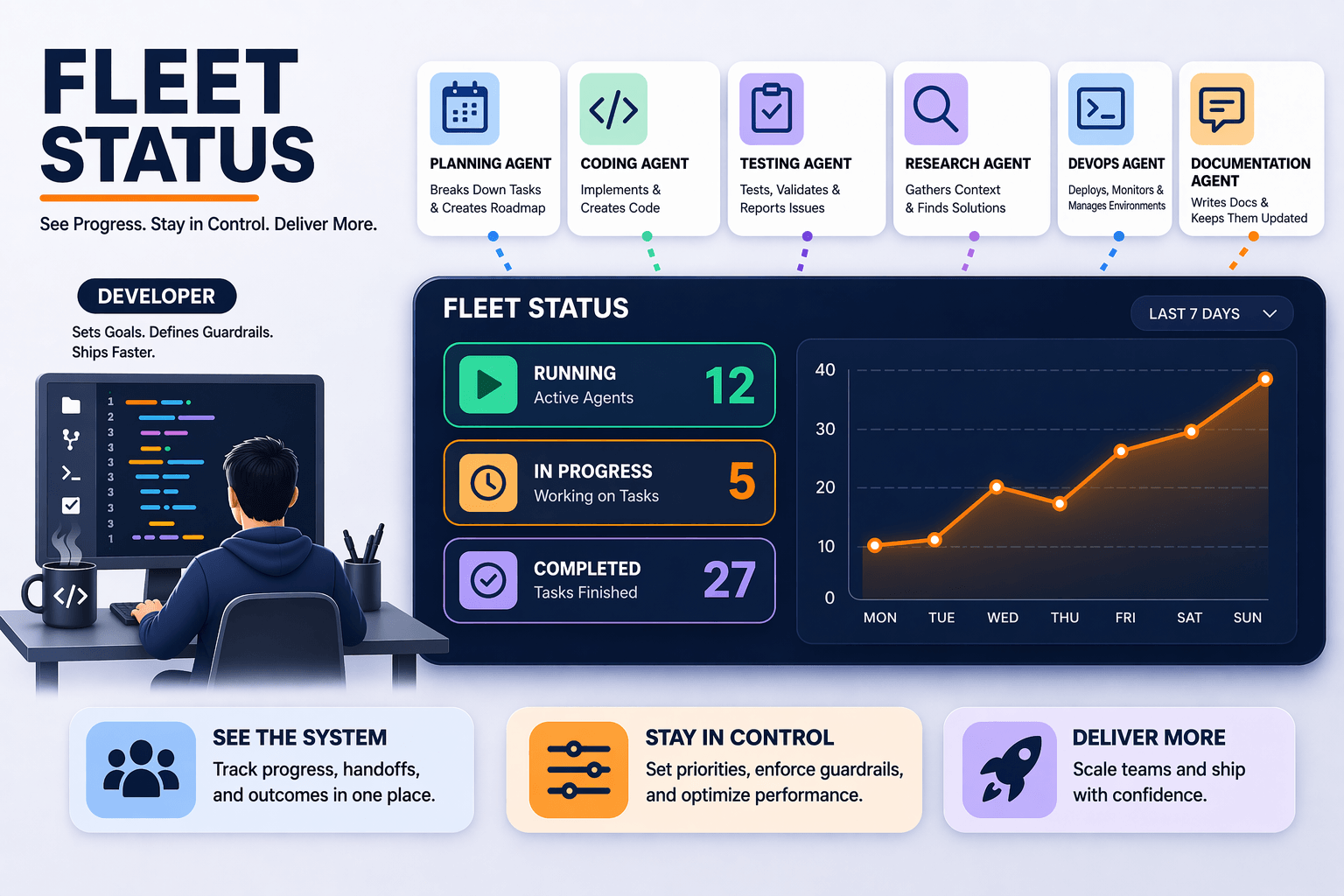
Orchestrating the Fleet: Managing Multi-Agent Development Workflows
The old way of building software was step by step. One engineer wrote code, tested it, fixed it, and then moved forward. This process worked, but it was slow. It also placed a heavy load on each developer. Today, that model is changing. In Agentic Software Engineering, engineers work with multiple AI agents at the same time. Each agent has a clear role. One may write code, another may test it, and another may review it. This creates a system where work happens in parallel.
This is known as a multi-agent workflow. It allows engineers to guide many processes at once. Instead of doing every task, they manage how tasks move between agents. This is a key part of Agentic Software Engineering.
These agents are not random tools. They are structured to handle specific tasks. They follow instructions and improve with feedback. Engineers must design how they work together. This makes orchestration a core skill in Agentic Software Engineering.
The shift from single tools to multi-agent systems changes how teams think. It is no longer about using one assistant. It is about building a team of agents that work together. This is why Agentic Software Engineering skills are in high demand.
Engineers must define clear roles for each agent. They must decide how agents pass work to one another. This requires planning and structure. Without it, the system breaks down. With it, the system runs smoothly. This is the value of Agentic Software Engineering.
Another key part of orchestration is communication. Agents need clear instructions. Engineers must write prompts that guide behavior. These prompts act like task assignments. Strong prompts lead to strong results in Agentic Software Engineering.
Feedback loops also play a major role. Agents do not always get things right on the first try. Engineers must review outputs and give feedback. This helps improve performance over time. In Agentic Software Engineering, feedback is part of the system.
Many modern tools support this model. Platforms now allow engineers to assign tasks, monitor progress, and refine outputs. This shows how Agentic Software Engineering is becoming a standard approach in development. This model also allows for scale. One engineer can manage multiple agents at once. This increases output without increasing team size. It changes how companies think about productivity. Agentic Software Engineering makes small teams more powerful.
The role of the engineer becomes more strategic. Instead of focusing on each line of code, they focus on the system. They guide how work flows from one step to the next. This is the true meaning of Agentic Software Engineering.
At WorkForce Institute, we train learners to build these systems. We focus on real workflows and real tools. The goal is to help learners master Agentic Software Engineering through practice.
Source: GitHub Copilot Research and AI dev tools data – https://github.blog
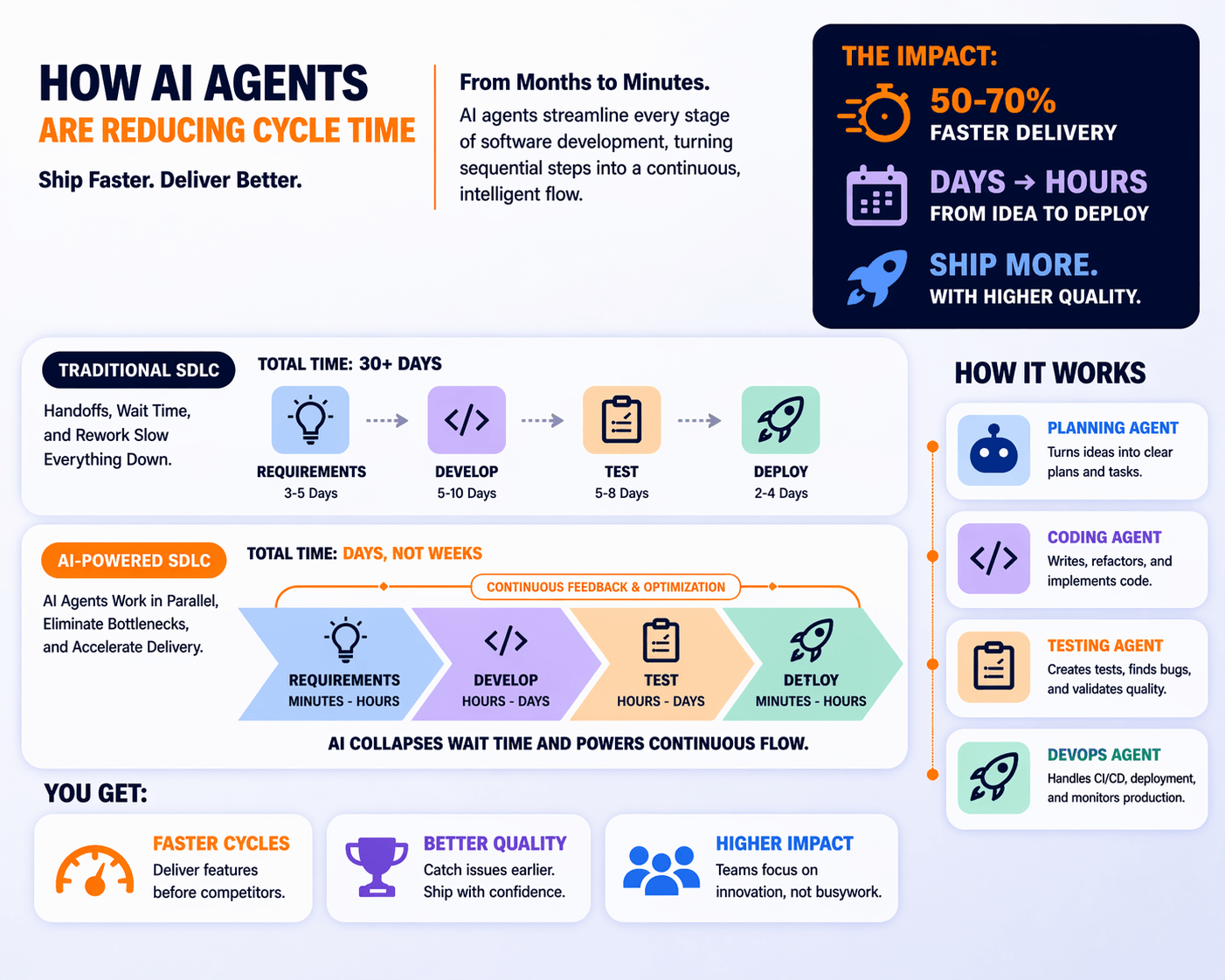
Collapsing the SDLC: How AI Agents are Reducing Cycle Times
The software development life cycle has always been long. Planning, coding, testing, and deployment often took weeks or months. Each step required time and effort. This created delays and slowed progress.
With Agentic Software Engineering, this cycle is changing. Many steps are now handled by AI agents. These agents work at the same time. This reduces delays and speeds up delivery.
Testing is one of the biggest changes. In the past, testing happened after coding. Now, testing can happen during coding. Agents check code as it is written. If errors appear, they fix them quickly. This is a core part of Agentic Software Engineering.
Documentation is also faster. Agents can write notes as they build systems. This keeps records up to date without extra work. Engineers no longer need to stop and document each step.
In Agentic Software Engineering, these tasks happen in parallel. This means less waiting and more progress. It allows teams to move quickly without losing quality.
Deployment is also changing. Agents can prepare code for release. They can run checks and confirm readiness. Engineers review the final output and approve it. This reduces manual steps in Agentic Software Engineering.
Teams now report shorter release cycles. Projects that once took weeks can now be done in hours. This is a major shift in software development. Quality is also improving. Agents can run tests many times. They catch issues early. This reduces bugs and improves results. In Agentic Software Engineering, quality is built into the process.
Another key change is iteration speed. Teams can test ideas quickly. If something fails, they adjust and try again. This leads to better products. It also reduces risk.
Engineers now focus on guiding the process. They do not need to handle each step. They manage the system and ensure it works well. This is the role of Agentic Software Engineering.
Cost savings are another benefit. Faster cycles mean lower costs. Teams can do more with fewer resources. This makes Agentic Software Engineering valuable for companies.
At WorkForce Institute, we teach learners how to use these systems. We show how to reduce cycle time using Agentic Software Engineering. The focus is on real results.
Source: Deloitte AI development insights - https://www2.deloitte.com
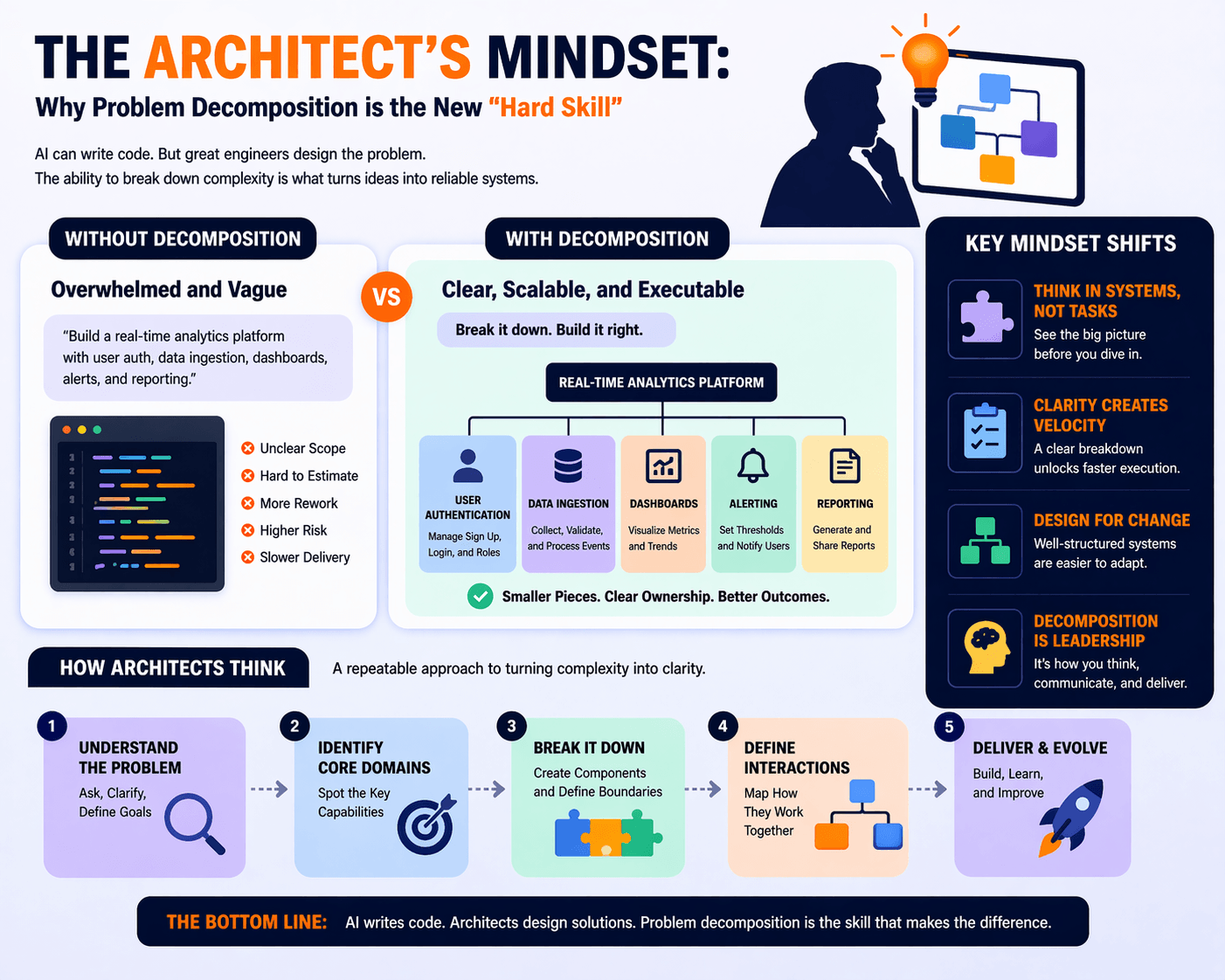
The Architect's Mindset: Why Problem Decomposition is the New "Hard Skill"
The skills that define a great engineer are changing. Coding is still important, but it is not enough. Engineers must now think in systems. This is where Agentic Software Engineering shifts the focus.
Problem decomposition is now a key skill. This means breaking a large problem into smaller parts. Each part can be handled by an agent. This makes work easier to manage.
In Agentic Software Engineering, agents need clear tasks. They do not handle vague instructions well. Engineers must define each step clearly. This requires strong thinking skills.
The role of the engineer becomes more about planning. They design how the system works. They decide how tasks connect. This is the core of Agentic Software Engineering.
Prompt design is also important. Engineers must write clear instructions. These prompts guide how agents act. Strong prompts lead to better results.
System design matters more than ever. Engineers must define how data flows. They must ensure that each part connects. This creates stable systems.
In Agentic Software Engineering, the engineer acts as an architect. They build the structure that agents follow. This requires clear thinking and strong planning.
Hiring trends show this shift. Companies now look for engineers who can design systems. They want people who can guide AI tools.
This is why learning Agentic Software Engineering skills is important. It prepares engineers for modern roles. It also opens new career paths.
At WorkForce Institute, we focus on building this mindset. We help learners think like architects. We teach how to guide systems using Agentic Software Engineering.
Source: LinkedIn Future of Work Report – https://www.linkedin.com
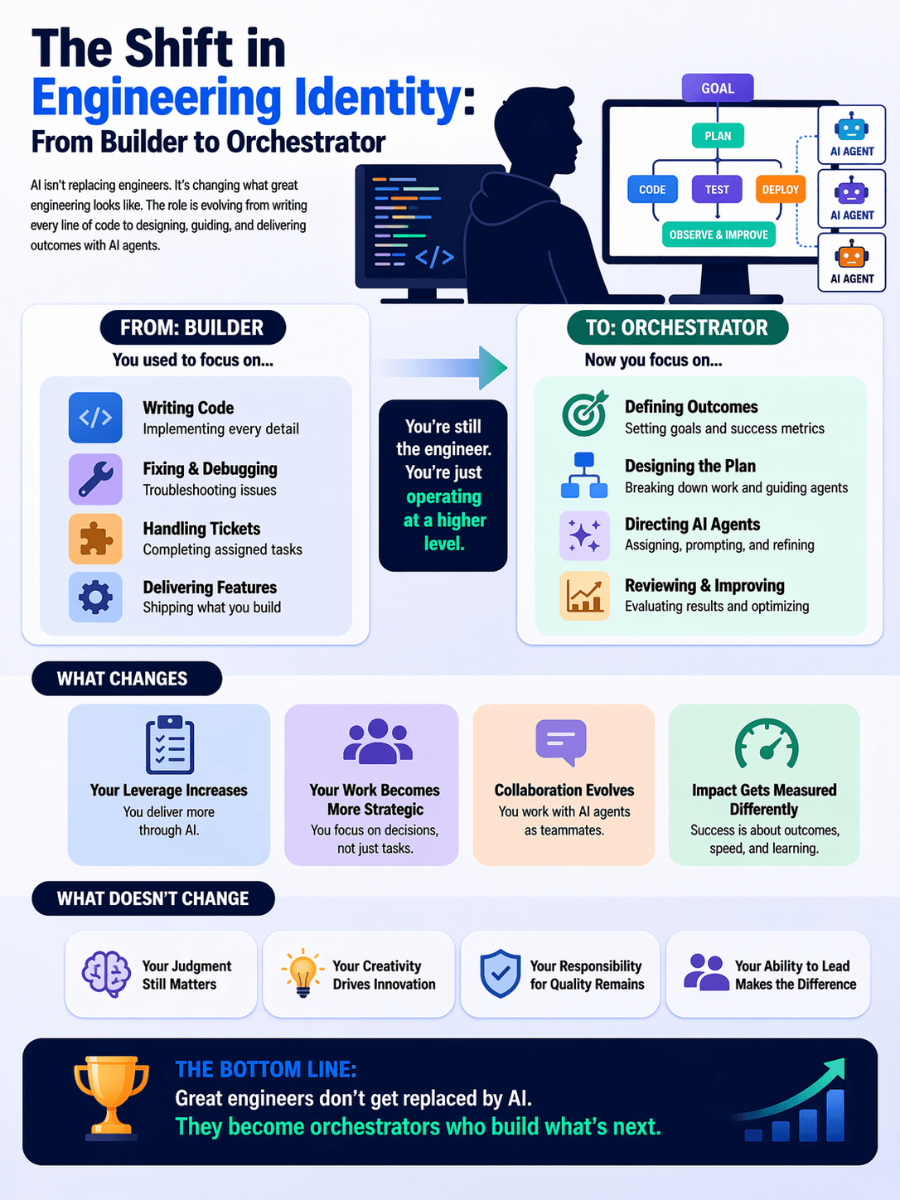
The Shift in Engineering Identity: From Builder to Orchestrator
The identity of the engineer is changing. In the past, value came from writing code. Today, value comes from guiding systems. This is the shift at the center of Agentic Software Engineering. Engineers no longer need to write every line. They need to define what should be built. They guide agents to complete tasks. This changes how work feels and how it is done.
This shift can feel uncomfortable at first. Many engineers take pride in writing code. Letting go of that control can be hard. But the new model offers more power.
In Agentic Software Engineering, engineers can build more in less time. They can handle larger systems. They can focus on higher-level problems.
The role becomes more creative. Engineers spend more time thinking and less time typing. This leads to better solutions.
It also creates new forms of leadership. Engineers must guide systems and teams. They must make decisions that affect the whole project. This is the essence of Agentic Software Engineering.
Real-World Use Cases of Agentic Systems
Many companies are already using this model. They use AI agents to build and maintain systems. This shows how Agentic Software Engineering works in real settings.
In web development, agents can build full pages. They write code, test it, and deploy it. Engineers review and guide the process.
In data systems, agents can clean and process data. They can build pipelines and monitor results. This reduces manual work.
In product development, agents can test features. They can gather feedback and suggest changes. This speeds up growth.
These examples show the power of Agentic Software Engineering. It allows teams to do more with less effort.
The Economic Impact of Agentic Engineering
The rise of AI-driven workflows is changing business outcomes. Companies can now build faster and reduce costs. This creates strong demand for Agentic Software Engineering.
Teams can produce more output with fewer people. This improves efficiency and reduces overhead. It also increases the value of engineers who understand Agentic Software Engineering.
Faster delivery leads to faster revenue. Companies can launch products quickly and respond to market changes. This makes Agentic Software Engineering a key driver of growth.
This shift also changes job roles. Engineers who adapt gain higher earning potential. They can lead projects and manage systems at scale using Agentic Software Engineering.
Conclusion: Future-proofing your engineering career by embracing the "Agentic" era
The shift is clear. Software work is moving from manual coding to guided systems. Engineers are no longer just builders. They are orchestrators.
Agentic Software Engineering is at the center of this change. It allows engineers to work faster and smarter. It also changes which skills matter most.
Engineers must now think in systems. They must guide agents and manage workflows. They must focus on structure, not just syntax.
This shift creates new opportunities. Engineers who learn Agentic Software Engineering skills can lead teams and build faster than ever.
It also creates risk. Those who stay in old models may fall behind. The tools are changing, and the role is changing with them.
The good news is that this shift is learnable. With the right training, engineers can adapt. They can move from coder to orchestrator through Agentic Software Engineering.
At WorkForce Institute, we help learners build these skills step by step. The focus is practical and direct. The goal is real growth.
10x your productivity and lead the next wave of tech.
Enroll in the AI for Software Engineers Bootcamp at WorkForce Institute and master Agentic Software Engineering.